


Digikala Data Signals a Shift Toward Cheaper, Secondhand Goods
Digikala reports more searches for cheap and secondhand goods, fewer phone and laptop sales, and rising credit use as shoppers reassess their options.

Latest from Interview


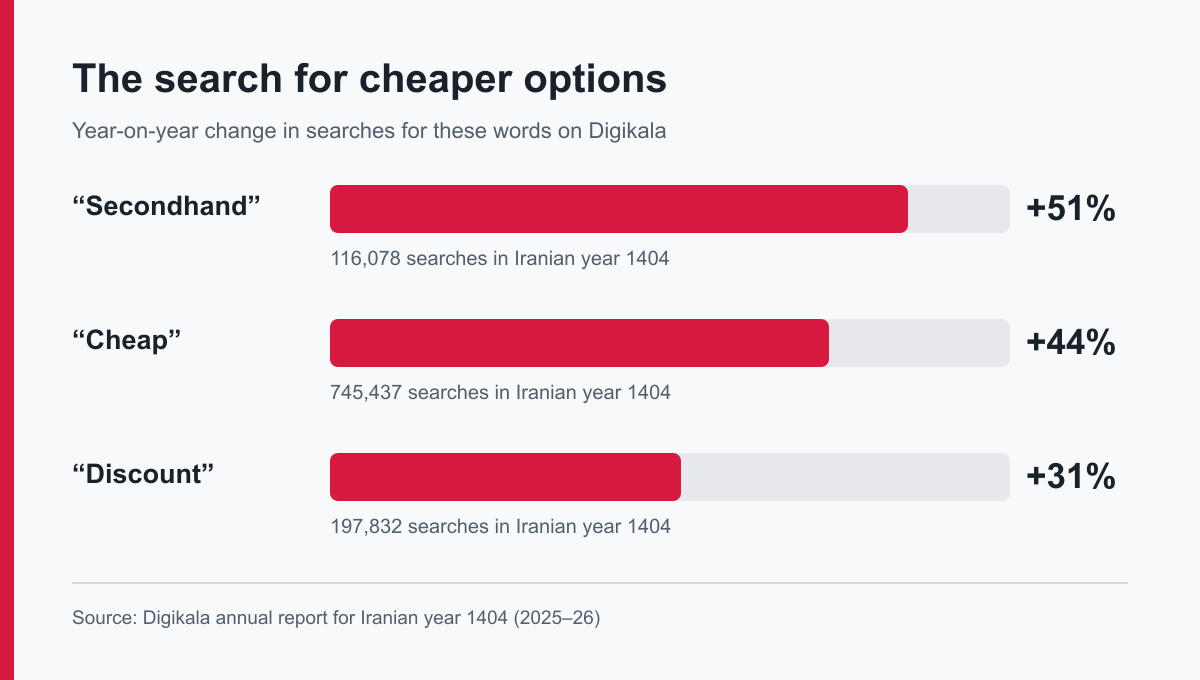
Searches for “secondhand” rose 51% on Digikala during the Iranian calendar year ending in March 2026. Searches for “cheap” increased 44%, while those for “discount” grew 31%, according to the Iranian online marketplace’s annual report.
The three terms were searched 116,078, 745,437 and 197,832 times respectively. Digikala says the rise in “secondhand” searches is especially meaningful: for some shoppers, it suggests a new product is no longer their first choice. That is the company’s reading of search behavior, rather than a count of secondhand purchases.
Other figures add weight to the question of what shoppers can afford. The number of phones sold on Digikala fell 21% from the previous year, and laptop unit sales declined 13%, according to the full report. Across the marketplace, the average price of goods sold rose 74% when supermarket purchases are included. That figure describes prices on Digikala; it is not a measure of Iran’s overall inflation rate.
The pattern invites a more difficult reading than a simple shift in taste. Buying secondhand can be a deliberate choice: a shopper may want better value, a particular product or a way to extend an item’s life. But when a new product moves beyond someone’s budget, the choice can narrow to buying used or delaying the purchase altogether. Digikala’s figures make that possibility worth examining. They do not establish how many customers faced it, or prove that declining purchasing power caused the increase in searches.
The distinction matters when comparing markets. US resale platform ThredUp’s 2026 report estimates that the global secondhand apparel market grew about 13% in 2025. Clothing resale in other countries provides context for the spread of secondhand shopping, but its figures cannot explain why Digikala users searched for used goods across product categories.
Credit is another part of the picture. Digipay, the Digikala group’s payments and credit business, reports that total purchases made on credit grew 221% year over year. Separately, Digikala says 20% of the items it sold were purchased through a four-installment credit option. These measures describe different activities; neither establishes why a particular customer borrowed.
Taken together, the searches, device sales and credit figures suggest that shoppers on Digikala are exploring ways to keep buying as prices rise. The report captures a change in the options they consider. It leaves open the central question: how much of that change reflects preference, and how much reflects choices that have become unaffordable?