
RabtHost Launches Free Hosting and Dynamic Ads for Persian Podcasts
RabtHost says it hosts 175 Persian podcasts, offering free hosting and dynamic ads to broaden creator revenue. Digikala says results are too early to assess.

Latest from Interview


RabtHost, a podcast hosting and advertising platform unveiled in Iran, is seeking to expand advertising income beyond the small group of Persian podcasts that attract traditional sponsors, using free hosting and ads that can be replaced after an episode is published.
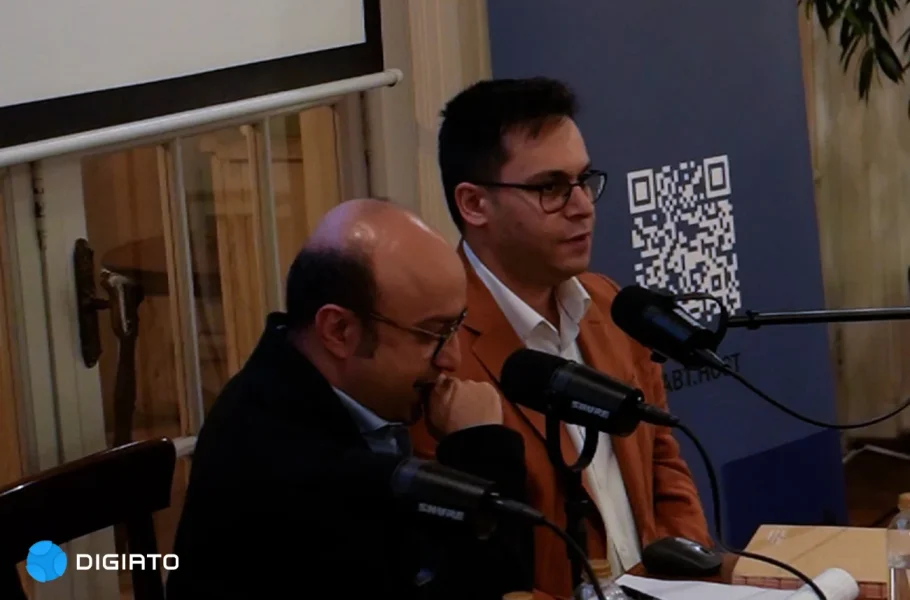
Co-founder Amirhasan Mousavi said the service hosted 175 podcasts with more than 4,700 episodes at its unveiling on October 4, 2026, at Karman House. The event, held to mark International Podcast Day, brought together podcasters, business executives and journalists to discuss audio advertising, creator economics and podcasts’ social role.
Mousavi said roughly 20 to 30 popular podcasts attract strong interest from brands and have queues of sponsorship requests, while hundreds of quality shows struggle to secure sponsors. RabtHost’s aim is to make advertising revenue available to more of those creators through data-driven ad delivery.
Mousavi estimated that Persian podcasts have more than 15 million regular listeners and put the Persian-speaking audience outside Iran at about 5 million. He described listeners as an engaged audience that offers brands opportunities for targeted communication.
New ads in older episodes
Registration and hosting are free, according to the platform’s launch presentation. Creators can migrate a podcast by entering its existing feed URL, while distribution uses the open RSS standard to make shows available through Castbox, Apple Podcasts, Spotify and Iranian listening apps.
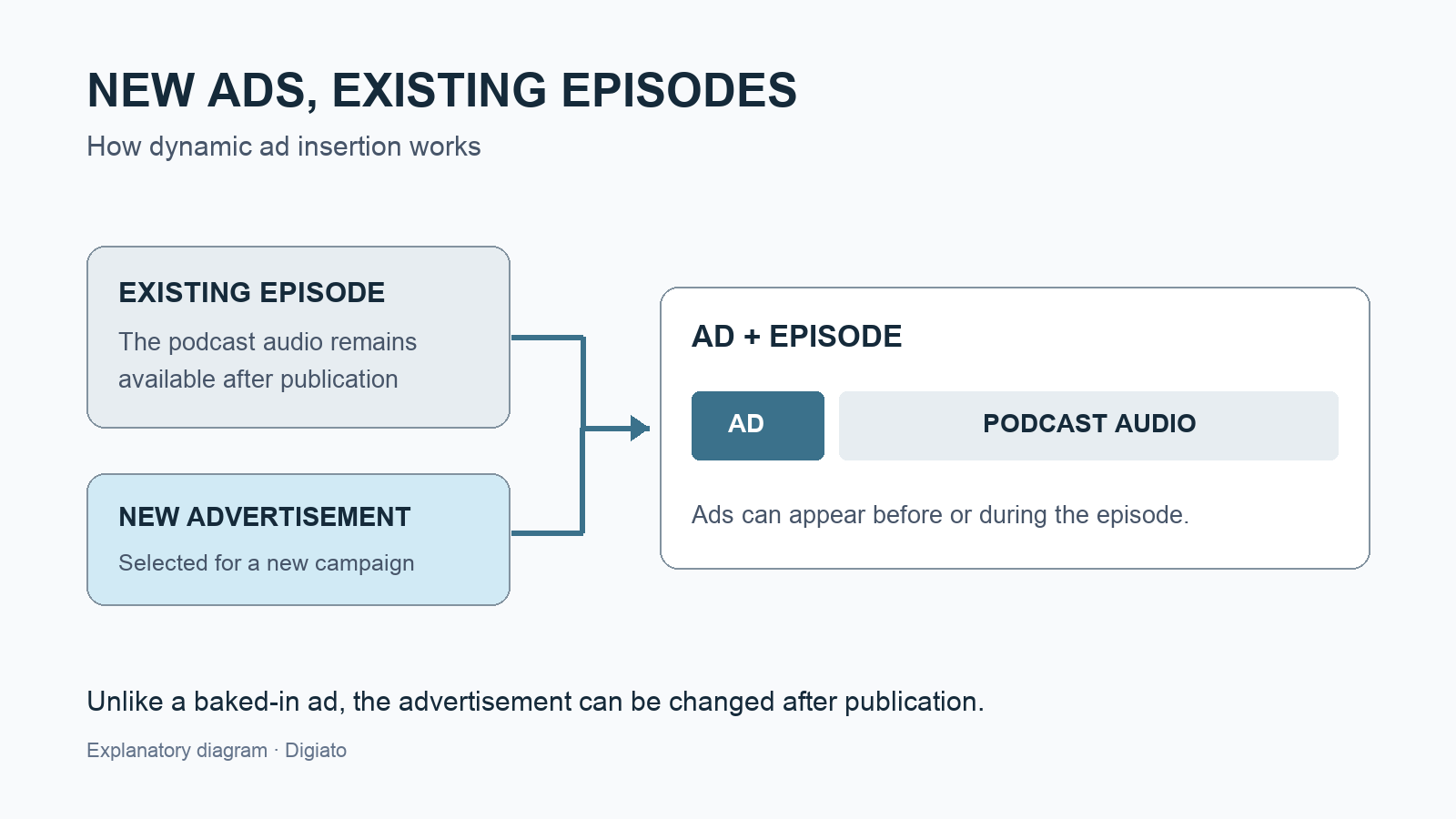
RabtHost uses dynamic ad insertion to place ads before or during an episode. Unlike a “baked-in” advertisement permanently recorded into the audio file, a dynamically inserted ad can be changed after publication. That allows older episodes to carry new campaigns and generate fresh revenue for their creators.
Mousavi said traditional sponsorship can involve high upfront costs, lacks a data-driven approach and is largely accessible to a limited number of popular shows. He described RabtHost as a connection between creators, podcast listening apps, brands and audiences. The founders presented it as Iran’s first podcast hosting and monetization platform with a programmatic audio advertising marketplace.
The platform says advertiser charges and creator earnings are calculated using valid plays, with artificial traffic, bots and downloads lasting only a few seconds filtered out. Creators can view earnings and metrics such as cost per thousand plays, or CPM, in their dashboards.
According to the founders, creators retain the economic and moral rights to their content, can move their feeds elsewhere and can continue to work with their own sponsors. More advanced audience segmentation and real-time bidding for advertisements are planned for later stages.
Domestic hosting and content responsibility
Mousavi said audio files are distributed through domestic cloud infrastructure to preserve access for listeners inside Iran during disruptions to international internet connectivity.
That addresses a problem highlighted in Digiato’s earlier reporting on how an internet shutdown disrupted Persian podcasts: domestic listening apps could display episode information while failing to play audio stored on unreachable foreign servers.
Co-founder Siavash Safarianpour said RabtHost does not review or censor content before publication and that the podcast producer bears primary responsibility for it. Discussing regulation, he said the sector lacks clear, dedicated rules and described its position as resembling that of the press.
Safarianpour warned that censorship could drive established, publicly identifiable podcasts underground. The founders said their broader goal was a sustainable creator economy and measurable advertising opportunities for Iranian brands, reducing creators’ dependence on negotiating individual sponsorship deals and overcoming hosting barriers.
Digikala says results will take time
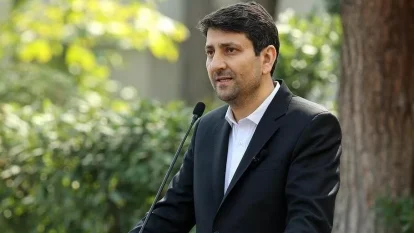
Hamidreza Chitchian, vice president of marketing at Iranian e-commerce company Digikala, said its collaboration with RabtHost had begun about two months before the event. He said it was too early to evaluate the results, although he welcomed adding the platform to Digikala’s media mix.
Chitchian argued that podcast listeners actively choose content and listen attentively, making information about their choices and intent valuable for targeted brand messages. In his view, that engagement can support communities around content and brands.
He joined Mousavi, Safarianpour and Marzieh Sadeghi of the Fiction podcast on the event’s second panel, which discussed the platform’s model, advertiser experiences and podcast regulation.
An economy beyond episode revenue
An earlier panel featured Farshad Negahdar, co-founder of Koja content house and producer and co-host of the Karkasb podcast; Sahar Nahvi, founder of Be Nahvi Digar studio and creator and host of the Keshoo video podcast; and Arash Barahmand.
Negahdar said part-time podcasters outnumber full-time creators globally, and argued that the networks and businesses built around a show can become more valuable than the podcast itself. In that view, podcast economics extend beyond direct income from publishing episodes.
Nahvi said podcast revenue in Iran is largely based on sponsorship. Asked whether podcasting can be a sustainable business, she advised prospective creators to be resilient, believe in their ideas and maintain a regular publishing schedule.
A space for complex questions
Sociologist Mohammad Fazeli, creator of the Daghdagheh Iran podcast, described long-form audio as a way to explore problems such as water and electricity shortages, dust pollution and inflation without reducing them to one-line answers. He also argued that greater awareness can help people undertake collective work.
Fazeli said each discussion on his podcast starts with a question about Iran, rather than a book. Books are then selected for their contribution to that discussion. Production involves reconstructing the argument, reorganizing the text for listening, explaining how conclusions are reached and separating an author’s claims from the narrator’s interpretation before returning to the Iranian issue at hand.
He said he hoped the podcast would help listeners better understand Iran, think in greater complexity and contribute responsibly to its development. Podcasts, he added, can encourage restraint against violence, dialogue and listening while broadening audiences’ perspectives.