Tehran develops digital twin as traffic demo goes live, official says
Tehran has launched a traffic digital twin demo, its urban technology chief says, as the municipality prepares a broader city model and CITEX support programs.

Latest from Interview


Tehran is developing a digital twin of the city and has launched a traffic demonstration, the municipality’s urban technology chief said, describing a phased project intended to support decisions on transport, energy and environmental problems.
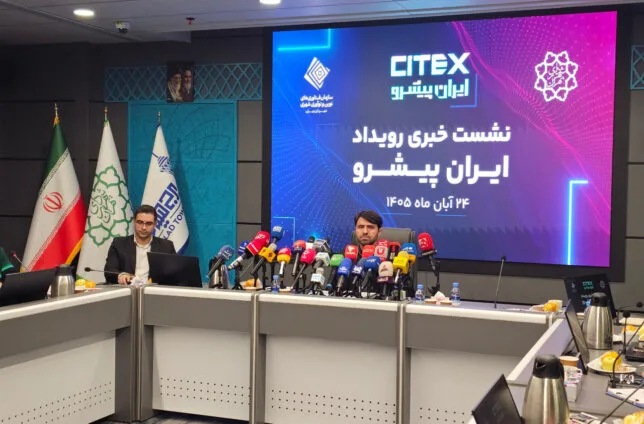
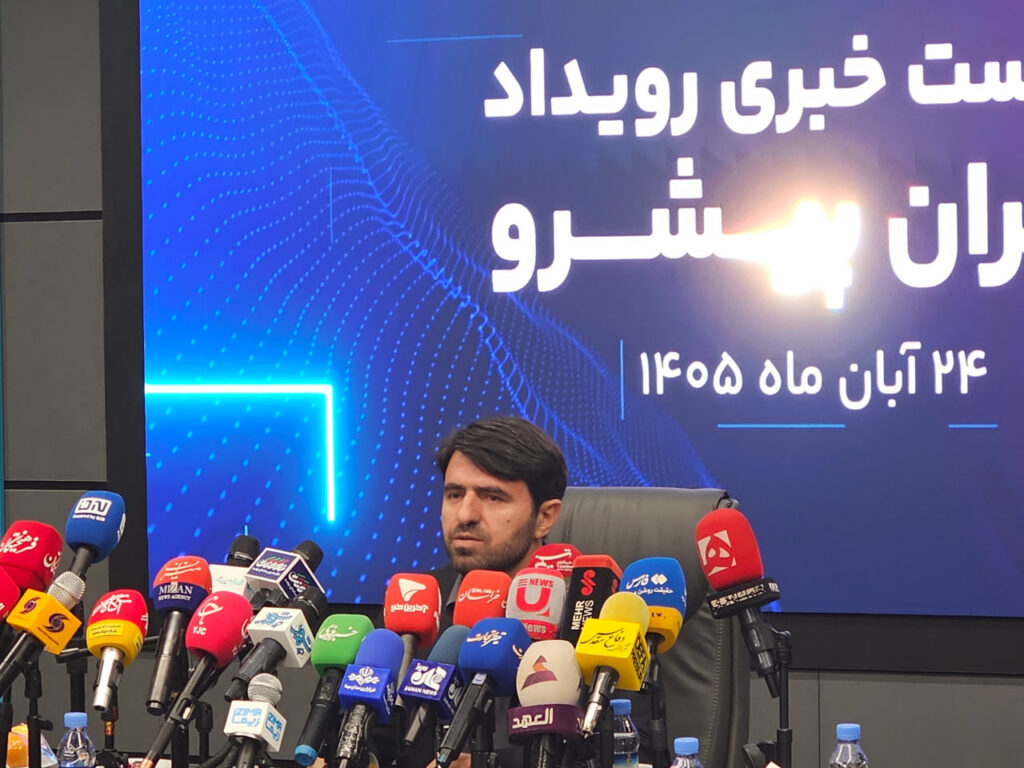
Behzad Paymard, head of Tehran Municipality’s organization for new technologies and urban innovation, outlined the work at a Nov. 15 news conference ahead of CITEX, an urban technology event in the Iranian capital.
A digital twin is a virtual model that uses data from a physical system to help monitor its condition and test scenarios. Paymard described Tehran’s traffic system as a demo; he did not announce completion of a citywide system.
He said the broader project is intended to support data governance and analysis addressing traffic, environmental issues, waste and energy. Its complexity and cost require development in stages, with support from the presidency’s science and technology office and domestic technology companies.
Components covering Tehran’s climate and weather, flood management, smart irrigation and satellite imagery analysis have also been developed, he said. Artificial intelligence, plasma technology, advanced materials and robotics are among the organization’s other technology priorities.
A roadmap for municipal technology
The municipality plans to present a science and technology roadmap at CITEX, also branded “Iran Pishro.” Paymard said the roadmap, developed over the past year and a half across municipal responsibilities, would be shared with researchers and technology businesses for input before being finalized.
The aim is to connect city departments’ needs with universities, private businesses and investors, he said. Priority problems include smart transport, energy supply imbalances, waste management, resource reuse and the use of digital services to support municipal management and sustainable financing.
Paymard said Tehran should provide opportunities to develop, test and commercialize technology, rather than simply buy it. He also invited residents to attend and learn about the city’s plans.
More than 100 technology companies are expected to participate alongside municipal bodies presenting their needs and future programs, he said. Defense-sector organizations are also being considered as a source of technologies, including dual-use technologies, that could have civilian urban applications where feasible. Investors and major business groups, including Bank Shahr, are supporting the initiative, he added.
Questions about competition with digital businesses
Asked by our reporter how the proposed approach squared with the municipality’s record, Paymard said changing its approach to governance could take five years to produce visible results.
The question cited municipal competition with digital businesses in ride-hailing and cinema ticket sales, as well as excavation obstacles that have impeded fiber-optic expansion.
Paymard said the municipality wanted closer cooperation with digital-economy companies following past disagreements. He did not announce specific changes to those activities or excavation procedures.
Cash prizes and financing for winning projects
More than 1,000 companies submitted projects and products to CITEX, Paymard said. Of these, 220 companies and products met the requirements to enter evaluation and judging. Winners have been selected in three categories: transport, finance and fintech, and citizen services. Their names are to be announced at the closing ceremony.
First-place winners in each category are to receive 3 billion tomans in cash, followed by 2 billion for second place and 1 billion for third. Separate financing of 10 billion, 7 billion and 5 billion tomans, respectively, is planned to help commercialize products and enable municipal contracts. Paymard did not specify financing terms.
The accompanying “Bazr-e Talayi,” or “Golden Seed,” competition focuses on ideas from school and university students. Preliminary rounds have taken place, with final judging and team selection planned during the exhibition.
The official event website lists CITEX for Nov. 17–20 at Tehran’s Milad Tower exhibition venue, with visiting hours of 3 p.m. to 9 p.m. Iran Standard Time. Paymard gave a shorter timetable at the news conference, saying the event would open Tuesday and continue through Thursday.
Asked about its overlap with a stock exchange, banking and insurance exhibition, he said the timing was chosen partly to accommodate students and would let visitors from outside Tehran attend both events.
Tokenization and neighborhood technology facilities
Paymard said the municipality is considering tokenization of major urban projects and public participation as financing models. He presented these as options under consideration, without announcing a token offering or specifying investors’ rights or a timetable.
The city also plans to establish science and technology facilities in neighborhood community centers for young people. Mobile technology workshops launched in recent months have been visiting schools and public gatherings to offer practical experience, he said.
Companies begin moving into Velayat technology park
Paymard distinguished his organization’s role in developing facilities for technology businesses from the municipal IT organization’s work providing information technology services. The two cooperate on projects including the digital twin, he said.
He said approvals had been secured for four sites associated with the municipal science and technology park: Goft-o-Gu Park, Velayat Park, the Ettehad complex and the Rey Cement Museum. Companies can apply, undergo assessment and, if accepted, obtain authorization for technology activities and space in the park’s facilities. Specialized innovation centers are also planned in city districts.
About 40 companies had been accepted for Velayat Park before the war, with occupancy originally planned for early Esfand 1404, in February 2026, Paymard said. Prepared space was ready that month, but wartime conditions prevented companies from moving in.
The site has been able to reopen over the past month, he said. Companies are now taking possession of their spaces, some have started operating, and about 60 more are undergoing admission. The municipality plans to draw on universities, research institutes and public and private business groups to expand the site into a technology hub.