

Digikala Plans Robotic Processing Center as Marketplace Passes 426,000 Sellers
Digikala plans a fully robotic processing center by March 2028 as its marketplace reports 426,865 sellers and expands logistics and AI services.

Latest from Interview


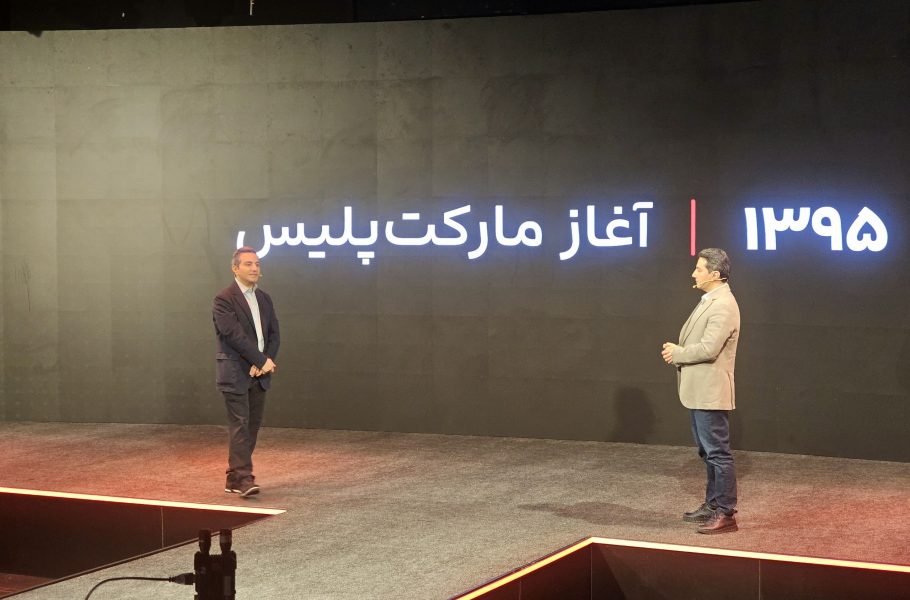
Digikala plans to open a fully robotic order processing center by March 2028, its founders said at a September 25 event marking ten years of the Iranian ecommerce company’s marketplace. They also outlined a proposed logistics complex covering 1 million square meters.
Saeed and Hamid Mohammadi described the planned center as the largest and most advanced of its kind in the Middle East. The founders described the logistics complex, which they called a “smart logistics city,” as a second phase involving design.
The plans were presented alongside figures showing how much of Digikala’s business now runs through third-party sellers. The company said its marketplace has 426,865 active sellers in 1,615 Iranian cities and villages. It put average sales per seller in the Iranian year ending March 2026 at 1.2 billion tomans. The toman is the currency unit commonly used in Iranian prices; one toman equals ten rials.
From retailer to marketplace
The Mohammadi brothers said Digikala considered opening its platform to outside sellers when its own catalogue had grown to about 120,000 products in the Iranian year that began in March 2016. They described the change as a difficult decision because customers would still associate purchases with Digikala even when independent businesses supplied the goods.
Ahmad Naghavi, Digikala’s commercial vice president, said third-party sellers’ share of the company’s total sales had risen from 70% to 75%. He also reported a 25% increase over the previous year in the dollar value of marketplace sellers’ sales. The company did not specify the exchange-rate basis or calculation method for that growth figure.
Naghavi said overdue compensation owed to sellers had been cleared and put seller satisfaction at 70% in the Iranian month spanning late March and most of April 2026. Acknowledging complaints about unclear billing, he said recent updates now show individual transactions on seller statements. These are company-reported measures; the event did not provide an independent assessment of them.
Logistics and services beyond Digikala’s storefront
Alongside the robotic center, Digikala described services intended to bring its ecommerce infrastructure to businesses selling elsewhere. Its proposed “Buy with Digikala” service would let shops and Instagram sellers offer customers a purchase experience using Digikala’s services on their own websites or pages.
Naghavi said Digikala had introduced three-hour delivery for sellers with suitable physical storefront capacity. He also described a gradual rollout of “Service Hub,” through which outside providers would supply services Digikala does not offer directly. He said 10% of the company’s customer support had become “smart”.
AI tools for sellers
The founders said an AI assistant called Diyar would soon be made available to sellers. They also outlined plans for more accurate demand forecasting and further AI-based automation. In discussing what they called agentic commerce, they suggested that shopping could increasingly begin with AI assistants that direct customers to different retailers, including stores outside Digikala.
At the event, Alireza Souhani, a senior content quality team lead, introduced an AI feature intended to help sellers create and complete product listings. Amin Gharouni, a senior platform developer, described an improved Seller Academy with seller recognition, smarter search, a faster app and a redesigned mobile version. Marketplace-related podcasts are also available through the academy, he said.
A guest speaker’s view of marketplace resilience
In a separate presentation, sociologist Mohammad Fazeli discussed how marketplaces might help businesses respond to political and economic disruption. He outlined hypothetical scenarios ranging from a limited agreement to a prolonged conflict involving the United States and Iran; he did not present them as forecasts.
Fazeli argued that a marketplace is also a network through which sellers and buyers generate information and coordinate action. He urged Digikala to give sellers data-based guidance, map gaps between supply and demand, and help them make decisions during crises. He said the data created through the participation of buyers and sellers should be used fairly.
Digikala ended the event by recognizing selected sellers.