

From iPhones to Power Banks: How War Reshaped Shopping on Digikala
Digikala says wartime orders fell 48.7% while basket size held steady, with spending shifting from iPhones toward health and backup-power products.

Latest from Interview


Average daily orders on Digikala fell 48.7% during the 40-day war that began with U.S. and Israeli strikes on Iran on February 28, but customers who completed purchases spent almost as much as before.
According to the Iranian online marketplace’s annual report for the Solar Hijri year 1404, the average value of each shopping basket declined just 0.6% during the war. The number of products in each order increased from 3.69 before the conflict to 3.84 during it.
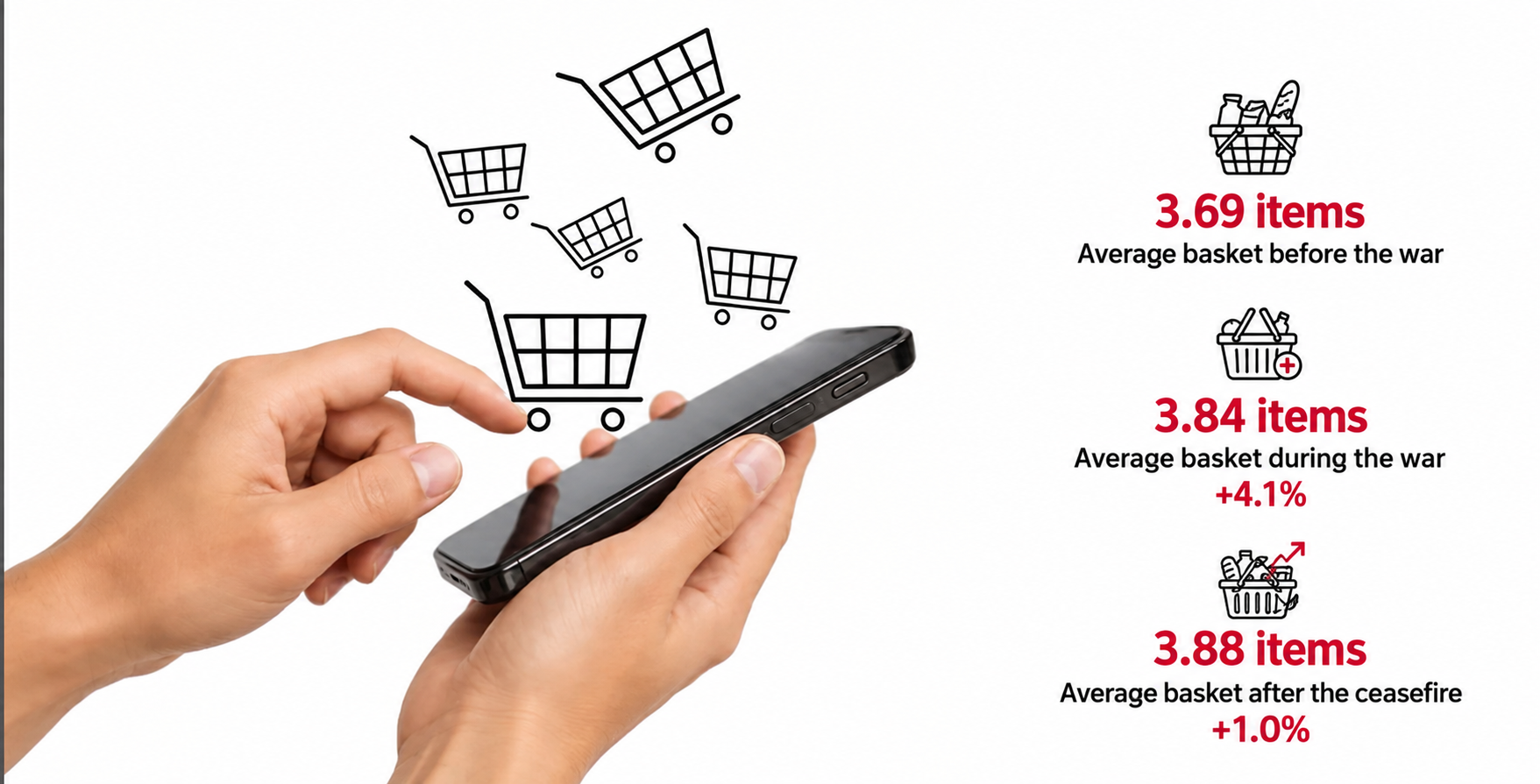
After an April ceasefire was announced, average daily orders rose 100.5% from their wartime level and moved above the prewar baseline. Average basket value increased 16.6%, while the number of products per order reached 3.88.
Digikala attributed the rebound to purchases that customers had postponed during the fighting. The report examines activity on Digikala rather than a representative survey of all Iranian consumers, meaning its findings describe customers on the platform.
Fewer orders and more cancellations
Digikala defines the wartime period as February 28 through April 7, 2026. The conflict began with joint U.S. and Israeli strikes on Iran, followed by Iranian attacks against Israel and targets elsewhere in the region. The United Nations secretary-general welcomed the announcement of a two-week U.S.-Iran ceasefire late on April 7. “Post-ceasefire” in Digikala’s report refers to the comparison period immediately following that announcement.
The order-cancellation rate rose from 21% before the war to 28% during it. Digikala said some orders were cancelled because of operational problems, while others were abandoned by customers.
After the ceasefire announcement, the cancellation rate fell to 18%, below its prewar level. Digikala interpreted the change as evidence of reduced uncertainty about whether orders could be completed and delivered.
The company said signs of precautionary buying had appeared before the attacks began. Sales of products such as canned food and bottled water would normally decline after the first few days of the month, but continued rising through the eighth day of Esfand, or February 27. Digikala interpreted the pattern as advance purchasing of essential goods.
iPhones and major purchases retreated
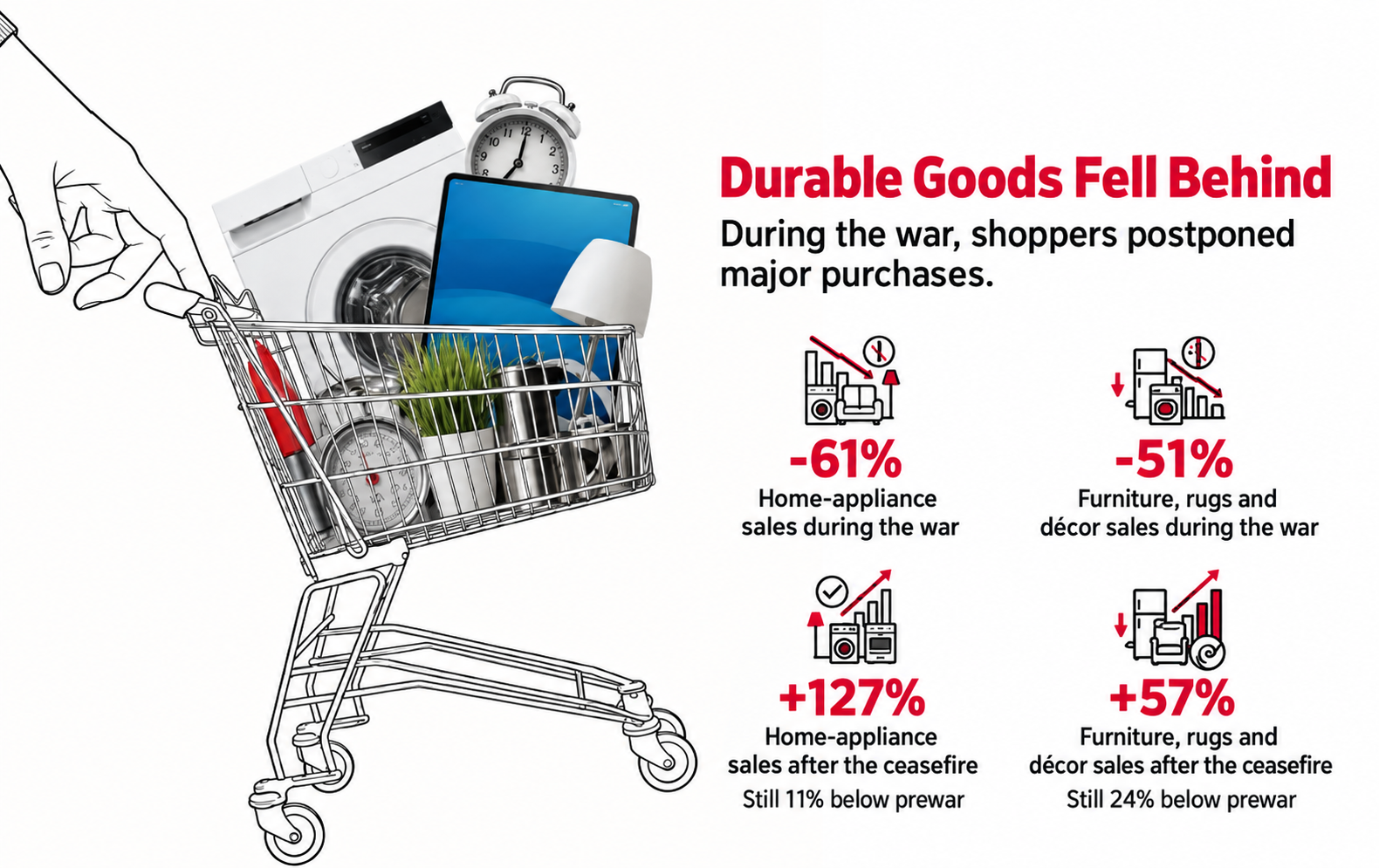
Expensive, deferrable purchases recorded some of the steepest declines. Daily sales of electrical appliances fell 61% during the war, while furniture, carpets and home-decor sales dropped 51%.
After the ceasefire, appliance sales rose 127% from their wartime level but remained 11% below the prewar baseline. Furniture and decor sales recovered 57% but were still 24% below their earlier level.
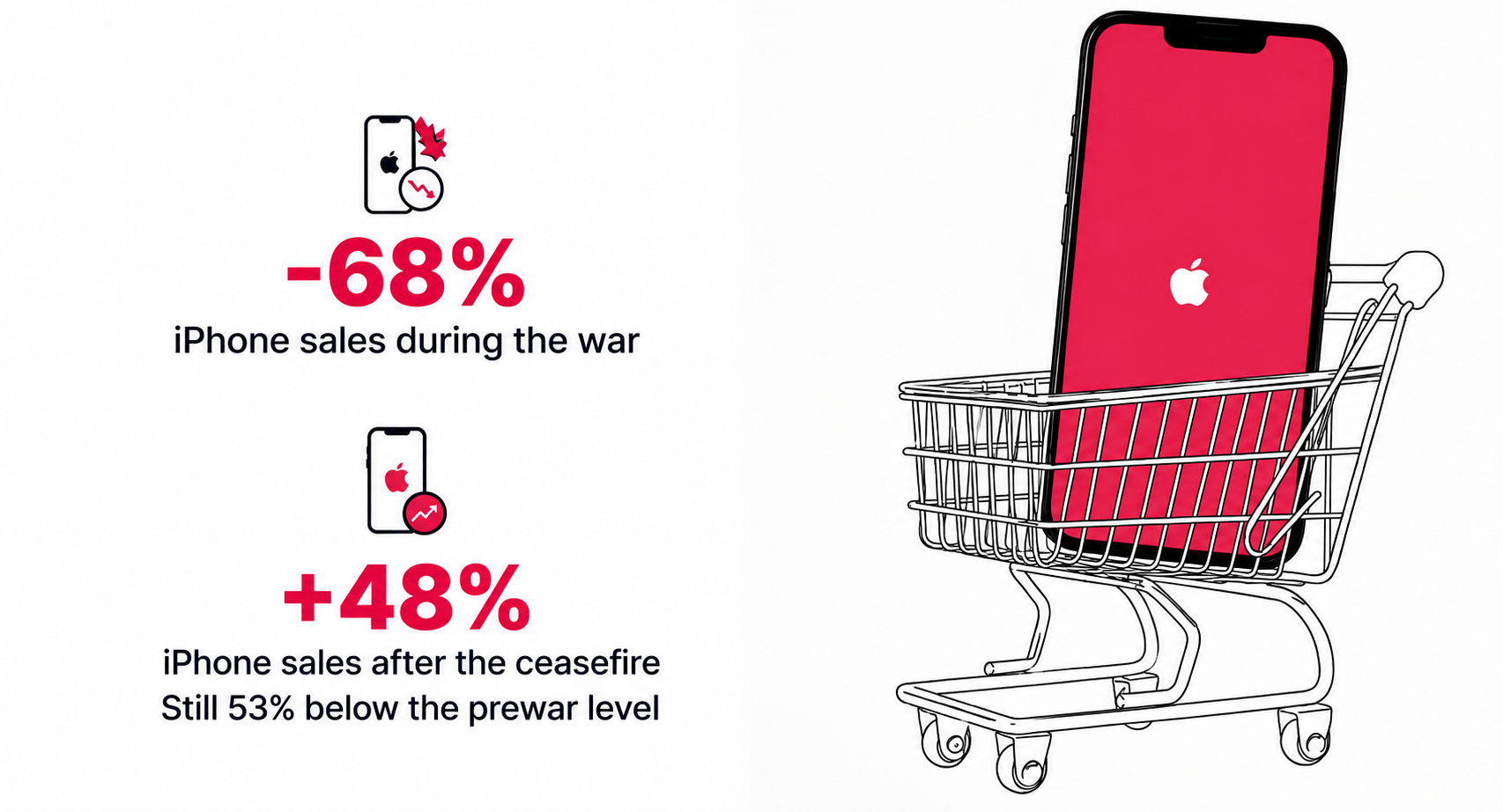
The decline was even sharper for iPhones. Daily iPhone sales fell 68% during the war. They subsequently rose 48% from the wartime level but remained 53% below their prewar baseline.
Power banks gained share, even as absolute sales fell
Health, backup-power and home-entertainment products captured a larger share of Digikala’s total sales. That shift did not mean more products were sold: with traffic and orders falling overall, daily sales in many of these categories also declined.
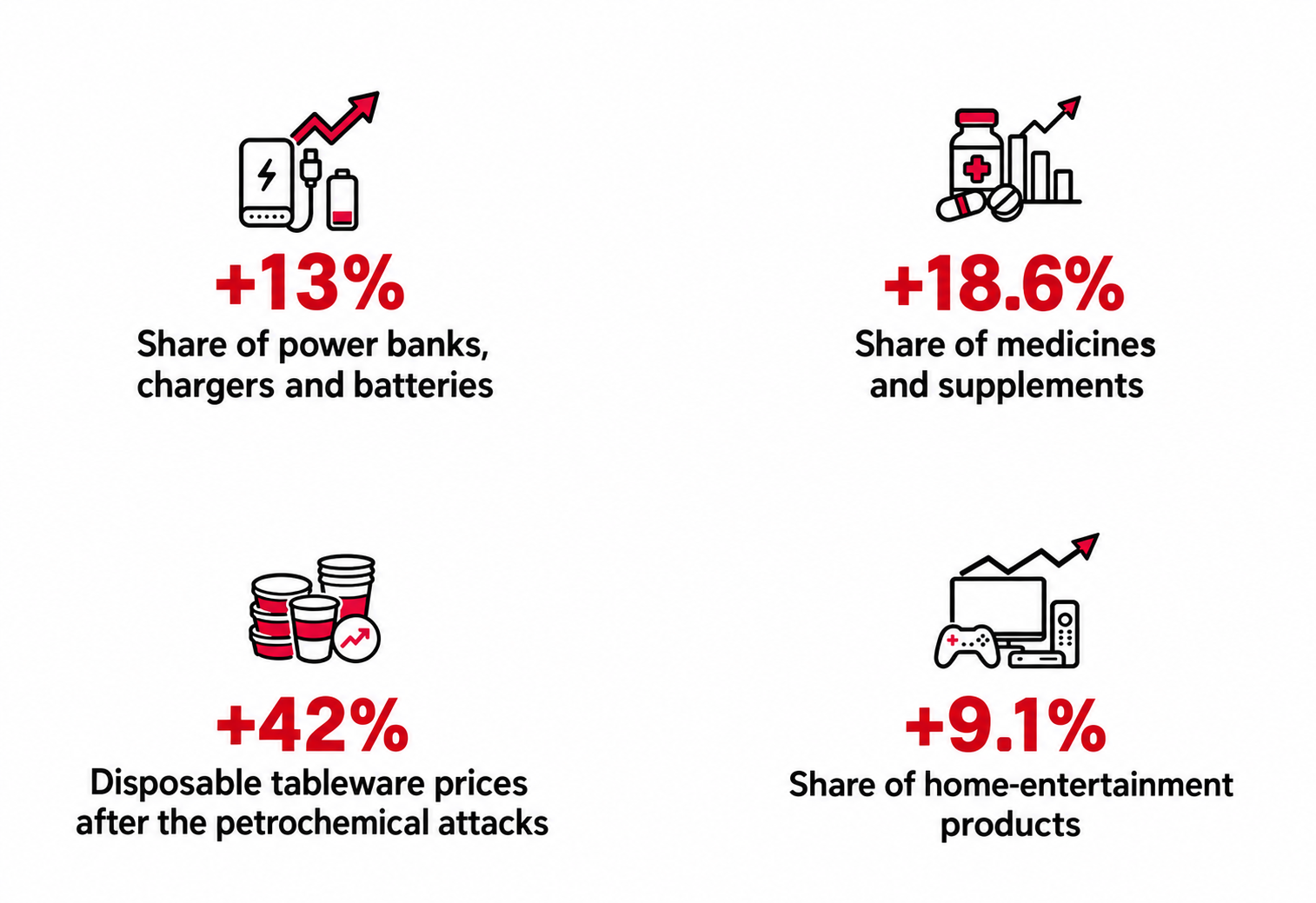
Daily medicine and dietary-supplement sales fell 37%, but the category’s share of total sales increased from 10.2% to 12.1%—a relative rise of 18.6%.
Sales of power banks, chargers and batteries declined 39%, while their share increased from 1.5% to 1.7%. Home entertainment’s share rose from 3.3% to 3.6%, even as daily sales in the category fell 42%.
The figures indicate that when customers were buying less overall, they allocated more of their Digikala spending to health, access to electricity and activities at home.
Searches for gold increased
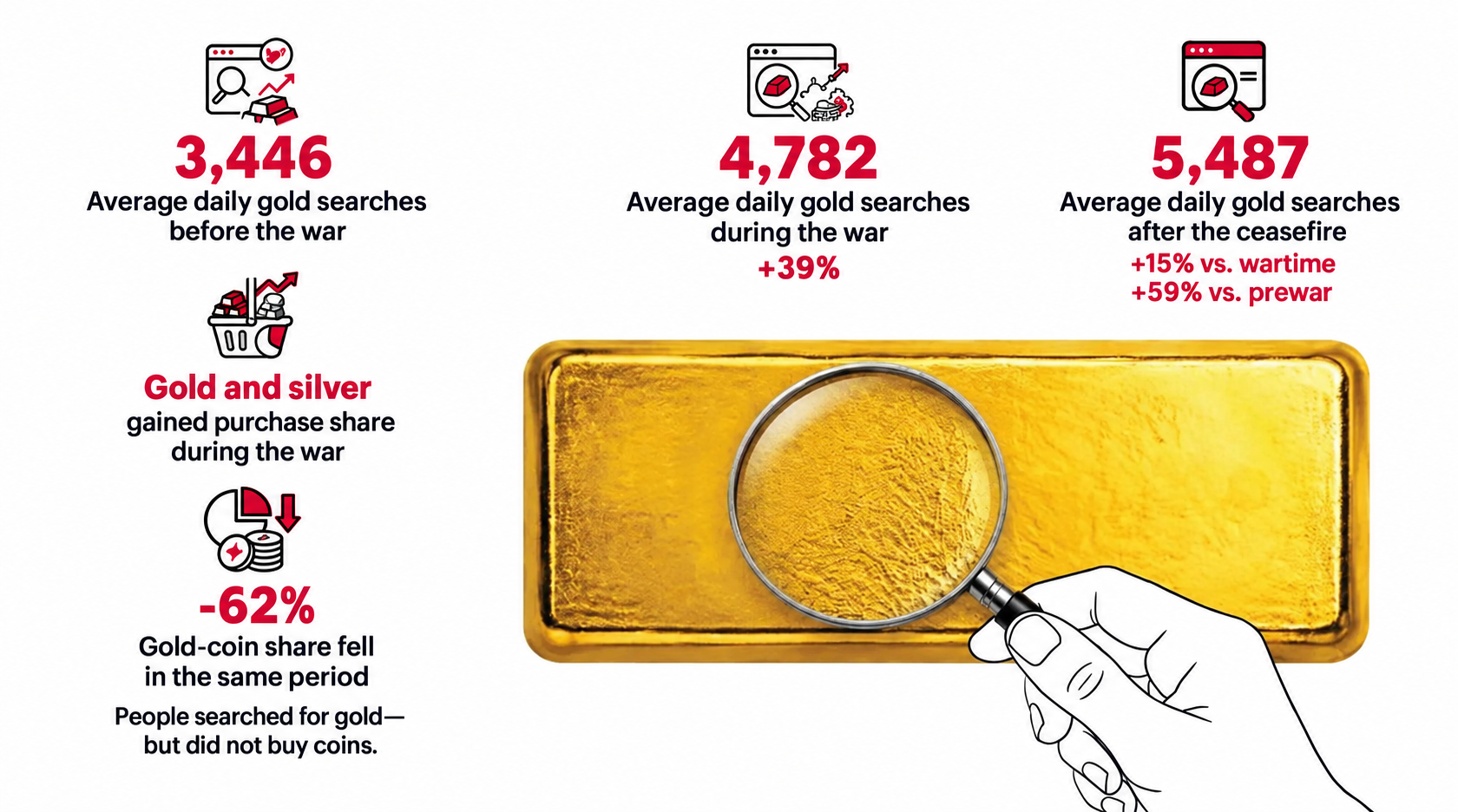
Average daily searches for the Persian word for gold rose from 3,446 before the war to 4,782 during it, an increase of about 39%. The figure reached 5,487 after the ceasefire, 15% above the wartime level and 59% above the prewar figure.
Gold and silver’s share of shopping baskets increased 10% during the war, while the share held by gold coins fell 62%. These figures measure searches and shopping activity on Digikala and do not, on their own, describe wider investment behavior in Iran.
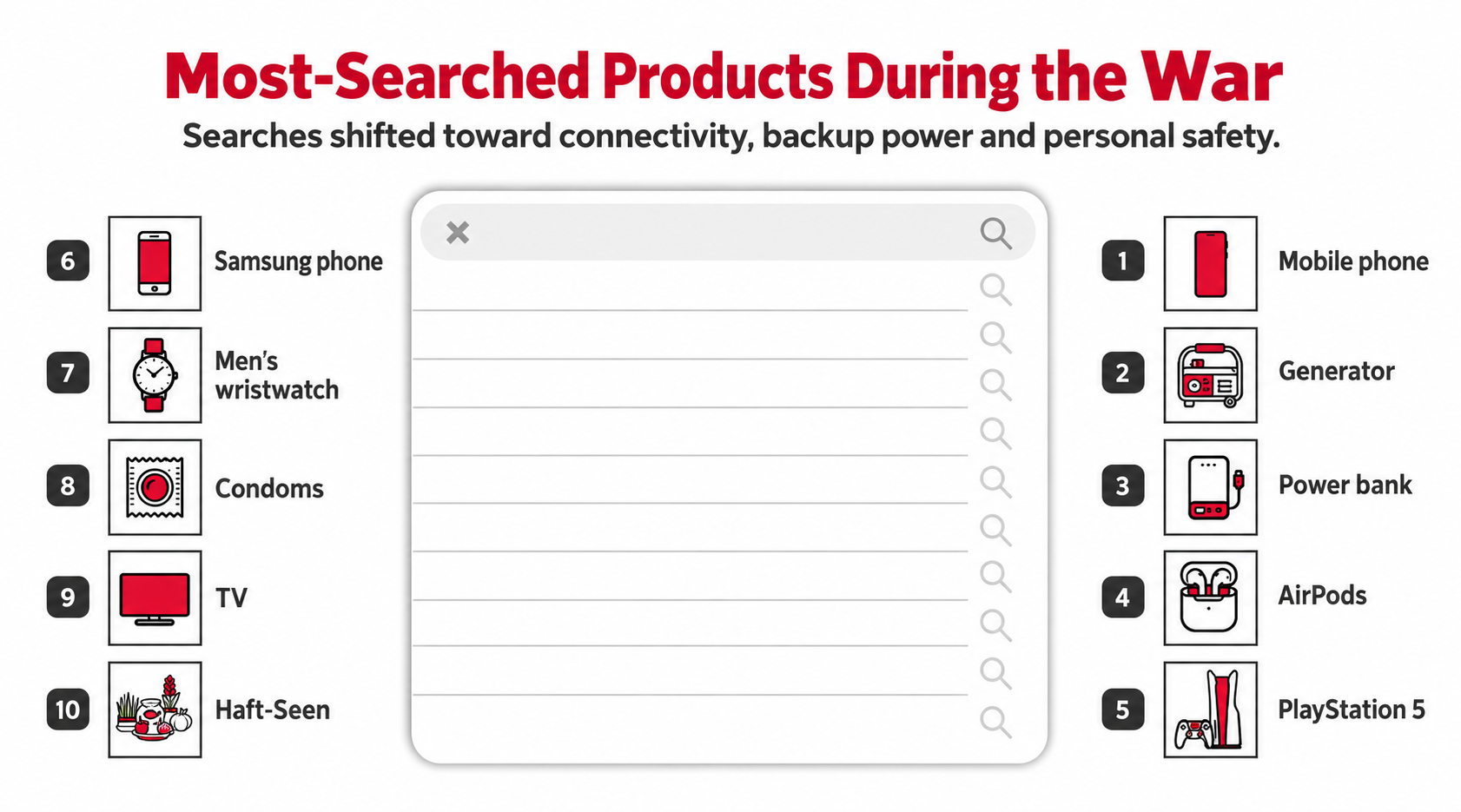
Mobile phones, generators and power banks were among the most-searched products during the war. Indian rice, solar panels, and travel and camping equipment were among the terms that suddenly attracted more searches.
Overall, Digikala’s data portrays a market in which rising uncertainty did not end shopping but made orders less frequent and more cautious. The rapid rebound after the ceasefire suggests at least some purchases had been postponed, while demand for iPhones and other expensive goods returned more slowly than demand for essential products.