Seed funding shortage puts Iran’s next major startups at risk, VC chief warns
Iran’s VC association chief warns that weak seed funding threatens future major startups, as the group pursues tax credits to support early-stage investment.

Latest from Interview


Iran’s venture capital association is seeking tax-credit rules that would allow eligible corporate venture funds to put 10% of their annual investment into seed-stage businesses.
The proposal would cap investment at 5 billion tomans per startup in the first year. It also seeks to remove a certification requirement at fundraising and prevent a startup’s commercial failure alone from disqualifying an otherwise compliant investment from tax credits.
The measures remain proposals. Amin Esfandiar, who heads the association’s corporate venture capital, or CVC, funds commission, said the commission was pursuing the plan with the presidential office responsible for science and technology, within the framework of Iran’s law to boost knowledge-based production.
The push comes as the association warns that too few seed investors are preventing some young technology teams from developing their businesses. Seed funding supports companies at an early stage, before their products and markets are established.
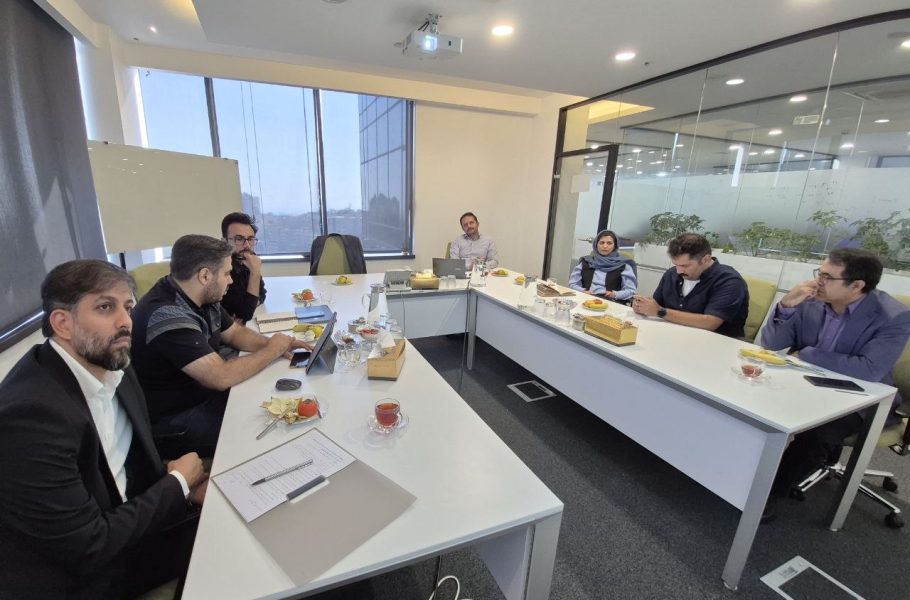
Seyed Mohammad Hossein Sajjadi Nayeri, the association’s board chairman, told a meeting of its specialist CVC commission that stronger support was needed for teams beginning that process. Without it, he warned, Iran would not see new startups comparable to Digikala, Snapp and Tapsi in the next two to three years. Digikala is an online retailer; Snapp and Tapsi operate ride-hailing services.
Direct investment or specialist funds
Under the proposal described by Esfandiar, eligible CVC funds could make seed investments directly or through specialist seed funds and accelerators.
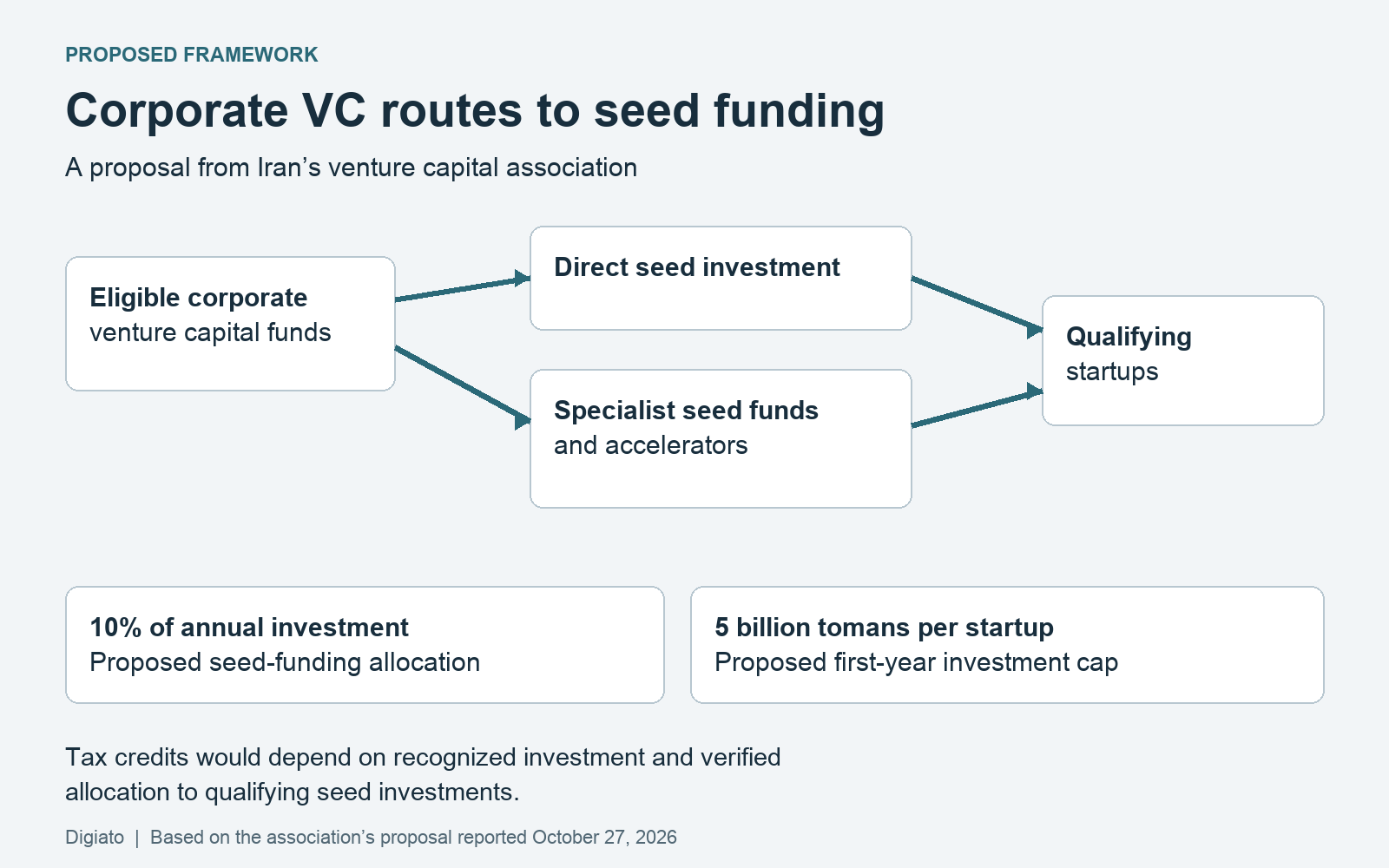
The investing company would receive a tax credit equal to its recognized indirect investment, subject to the applicable rules. Eligibility would depend on confirmation that the money had been allocated to qualifying seed investments.
Esfandiar said simplifying both investment procedures and acceptance of tax credits was a central aim. The association proposes assigning team assessments to specialist institutions and using audited documents and consolidated reports from the investment institution to assess credits, rather than requiring a review of each startup’s individual expenses.
Accounting for the risk of failure
Sajjad Zavar, the association’s secretary, said the proposals were intended to adapt the rules to seed investing, when a business’s product and market remain unproven and commercial failure is possible.
Under the plan, qualifying technology and innovation businesses would not need to hold Iran’s knowledge-based company certification when raising investment. Commercial failure alone should not remove the tax credit for an investment genuinely made in accordance with the rules, he said.
Zavar said the association’s role included gathering investors’ experience, identifying shared obstacles and turning those findings into practical proposals for policymakers.
He invited CVC funds to review the draft regulation and send their operational experience and suggested amendments to the association’s secretariat, so implementation problems could be identified before the text was finalized.