Myket’s planned IPO follows 32-month wait as Iranian tech firms queue
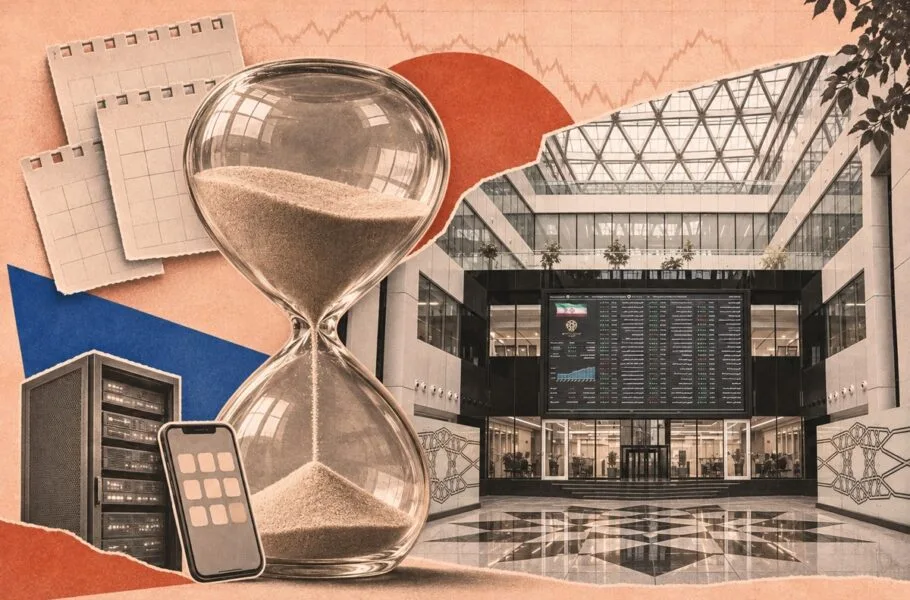
Myket’s planned IPO follows more than 32 months since admission, exceeding a 19-month median, as other Iranian digital businesses await their own offerings.

Latest from Interview


Myket is scheduled to make its stock-market debut in Iran on Nov. 11 after waiting more than 32 months since admission, about 13 months longer than the median for this year’s offerings.
The Android app store’s planned initial public offering on the Noafarin market of Iran Fara Bourse comes nearly four and a half years after ride-hailing platform Tapsi went public. Other digital businesses remain at different stages: online retailer Digikala and technology infrastructure group GreenWeb have secured admission to the Tehran Stock Exchange but have yet to offer shares, while classifieds platform Divar is still awaiting admission.
Our review of 27 companies that went public from the start of Iranian year 1405, in March 2026, through the period before Myket’s planned offering found a median admission-to-IPO interval of 19 months. Interviews with companies and advisers show that procedural requirements are only part of the explanation: valuation and shareholders’ willingness to sell also matter.
Admission is one step, an offering another
Admission does not mean a company’s shares are ready for sale. The company may still need to complete formal requirements and settle its valuation and offering terms.
Myket was admitted to the Noafarin market on March 4, 2024. Its ticker was registered on Aug. 12, 2025, with the offering now scheduled for Nov. 11, 2026. Our earlier report on Myket’s valuation and business examines the app store’s preparations for going public.
Including Myket’s scheduled offering, only five of the 28 companies in the comparison had longer admission-to-offering intervals.
The exchange matters, too. The median was 14.7 months for nine Tehran Stock Exchange IPOs and 21.8 months for 18 Iran Fara Bourse offerings, excluding Myket. Myket’s wait is about 10.5 months longer than the median for its own exchange.
Digikala has waited about 22 months since admission; about 17 months have passed since GreenWeb’s admission was announced. Both exceed the Tehran exchange median. Only three of its nine completed offerings had longer waits than Digikala’s current interval. Unlike the completed IPOs, however, Digikala’s and GreenWeb’s waiting periods are still running.
These figures measure elapsed calendar time. They include roughly 80 days of stock-trading closure following war, so the entire interval cannot be attributed to case reviews or company decisions. A trading halt does not necessarily mean all admission and IPO preparation work has stopped, either.
Some waits begin before admission
Tapsi’s admission-to-IPO interval was 16.8 months, but its path to the market began earlier. In summer 2020, then-Economy Minister Farhad Dejpasand promised that Tapsi, Digikala and several other companies would enter the stock market that summer. Tapsi’s IPO took place in June 2022.
Divar has not reached the point where an admission-to-IPO interval can be calculated. Nearly 20 months have passed since its admission meeting was canceled in late February–March 2025, and it remains at the pre-admission stage.
That waiting time is absent from a comparison that starts at formal admission. The route to going public therefore has two distinct periods: securing admission and moving from admission to a share offering.
GreenWeb awaits the regulator’s final step
Kamal Moravej, a GreenWeb board member and its IPO director, said conditions in the country had affected its progress since admission. He cited two wars and repeated periods of instability as factors affecting economic activity and administrative work.

Work toward registering the ticker had nevertheless continued, he said, crediting cooperation from the Tehran Stock Exchange. Most of the necessary steps had been completed, he added.
Moravej said GreenWeb hoped a final step by the Securities and Exchange Organization, the capital-market regulator, would allow ticker registration and an IPO in the second half of Iranian year 1405, which runs from late September 2026 to March 2027.
The group previously outlined plans to use an IPO to fund AI infrastructure expansion, with an autumn 2026 target. The latest comments offer a broader window rather than a firm offering date.
Digikala’s valuation remains a decision for shareholders
Digikala’s post-admission path has involved both formal requirements and price.
In late November–December 2025, Mohammad Amin Ghahremani, then acting deputy head for issuers and members at the Tehran Stock Exchange, told us the company had yet to complete some steps, including conversion into a public joint-stock company.
In late August–September 2026, Tehran Stock Exchange CEO Mahmoud Goudarzi emphasized the importance of the base price and valuation for offerings such as Digikala’s. He said the exchange would welcome these companies if capital-market interests and valuation standards were respected.
We understand that Digikala’s shareholders have yet to decide whether to offer shares at the proposed valuation. Investment banks carry out the valuation, which also requires approval from the exchange and the regulator. We sought comment from Digikala but had received no response by publication on Nov. 10.
Founders and investors can see different values
Majid Shojaei, strategy director at Toranj Investment Advisory, Digikala’s admission and offering adviser, said valuation differences were a challenge for digital businesses seeking to go public.
Their value depends heavily on brands, users and growth prospects, he said, and professional valuations often differ from founders’ expectations. Investors may also be less convinced by the long-term prospects that founders see in their companies.
Admission therefore does not necessarily mean shareholders have agreed to sell. Preparations may have advanced while the terms remain unsettled.
Shojaei also pointed to the limited number of comparable digital businesses in the public market. More offerings, followed by an observable record of performance, would help investors assess the sector. The earliest entrants, in his view, help establish a path for those that follow.
Myket’s offering could provide another test of how investors price a digital business with a different revenue model from Tapsi’s. Those experiences cannot simply be applied to an online retailer such as Digikala, a classifieds platform such as Divar or an infrastructure business such as GreenWeb. Each new offering can, however, add to the market’s limited record of valuing these companies.