
Black Friday in Iran sells excitement to inflation-weary shoppers, sociologist says
Black Friday in Iran gets bigger every year, even as high inflation and sanctions squeeze household budgets.

Latest from Interview


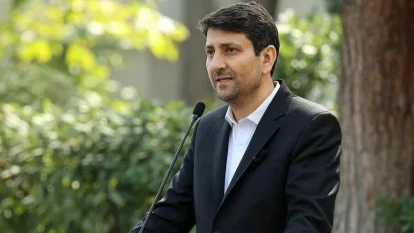
Black Friday in Iran gets bigger every year, even as high inflation and sanctions squeeze household budgets. Yet deep discounts seem to defy economic logic in such an economy. Sociologist Hamid Avarzamani says the puzzle makes sense only as a social question. In his view, the sales give stressed shoppers a brief sense of excitement and participation.
Many people argue that a seller would earn more by keeping the shop closed and selling the same goods later. One critic made this point on X. Such sales make sense, the user wrote, only in a market where storing some goods costs more than the profit from selling them. In Iran, by contrast, a seller can keep goods in a warehouse and sell them for more next year. “These shows are only good for deceiving customers,” the post concluded.
Doubts like these are common in everyday conversation as well as on social media. Last year, for example, shoppers complained of fake discounts, crashing websites and failed purchases during the sales.
Platforms see the event differently. Digikala CEO Masoud Tabatabaei answered our question about holding the sales in such conditions at a press conference in December 2025. Under inflation, he said, many people lean toward saving and hold back on buying. Events like Black Friday, however, let sellers keep their businesses turning, even at a lower profit margin.
To understand why buyers and sellers return to these sales on a fixed date each year, we spoke to Avarzamani. He holds a PhD in sociology and researches political economy. Economics alone, he argues, cannot resolve the contradiction, so the angle of view has to change.
From shopping malls to shopping dates
Avarzamani starts with how the country’s retail market has changed. From the 1990s to the late 2010s, he says, the market was organized around place. Shopping arcades, commercial complexes, malls, megamalls and chain stores all followed this pattern. They gathered shopping into large spaces. They also turned it into a social experience that mixed buying with strolling and leisure.
Then, from around the mid-2000s, a second process began, and it has peaked in recent years. Commercial and cultural occasions started to concentrate demand in time as well as in space. Valentine’s Day arrived first, in the middle of that decade, and many sociologists and critics commented on it. Christmas followed in the 2010s, and Halloween came next. For several years now, Black Friday has drawn the most noise and advertising in Iran.
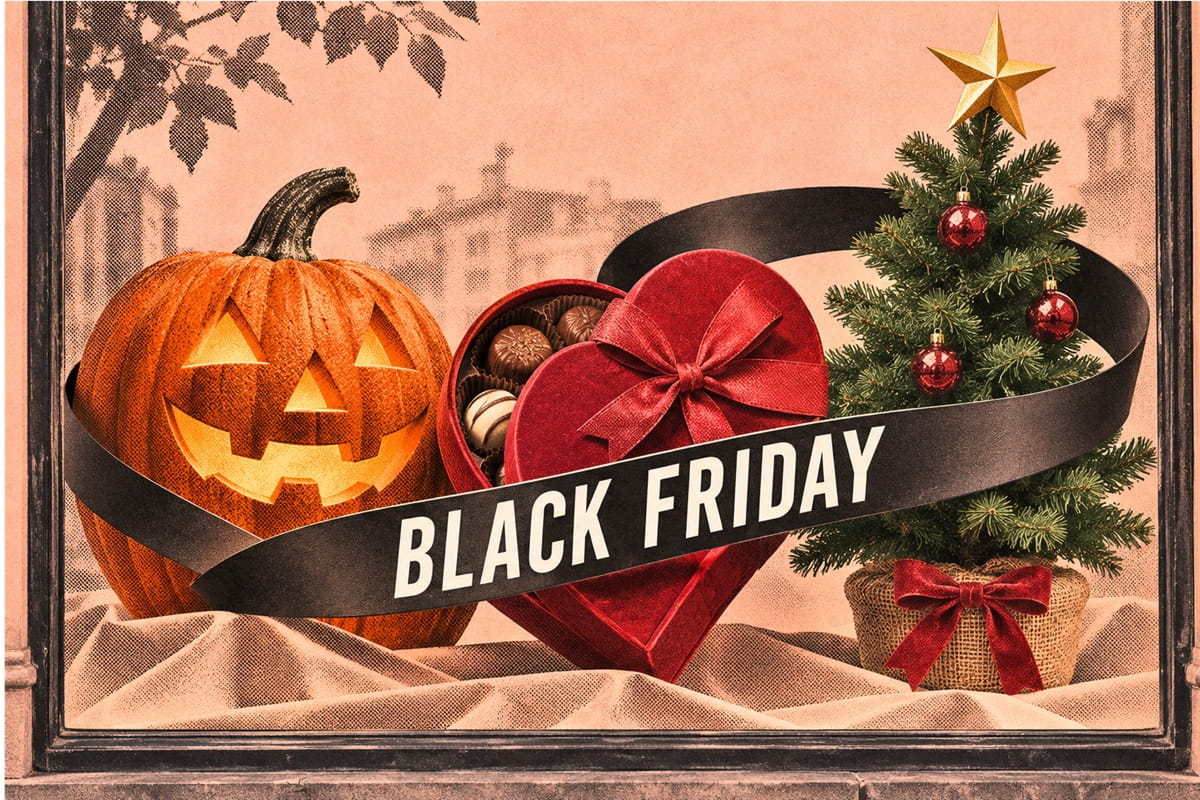
According to Avarzamani, e-commerce platforms have greatly strengthened this shift. So have payment networks, credit purchase services, logistics infrastructure and supply-chain finance. Part of Iranian society has also welcomed it, he says. “Until consumers welcome it, until the social space welcomes something, it does not take hold,” he said.
Why shoppers join Black Friday in Iran despite hardship
Avarzamani discusses the event from three angles. To begin with, Iranian society has shown a growing appetite for global and transnational occasions. Valentine’s Day, Halloween, Christmas and Black Friday become more visible in Iran year by year, he says. Moreover, this happens even in the worst financial and economic conditions. Viewed only through economics, he says, the contradiction looks unsolvable.
Through a social lens, however, the reasons become clear. The key issue, in his words, is “the production of satisfaction.” People face economic limits, uncertainty, a sense of deprivation and experiences of war and sanctions. In that setting, Black Friday in Iran can create excitement, a feeling of access, participation and satisfaction, even if only for a while.
So buying a discounted item goes beyond its use value. Instead, it gives the buyer the feeling of catching an opportunity, making a smart choice or joining a shared global experience. The market, he says, already has strategies for exactly this. As a result, it has captured people’s attention. Even people with no plan to buy end up checking prices, he says. Willingly or not, they are drawn into the atmosphere.
Another reason, he says, is the social and emotional position the event creates, which connects a person to a collective event. It also builds urgency through time limits and promises of exceptional deals. That urgency pushes people to go along and take part. In the end, the market sets standards under which shoppers treat staying out as a lost opportunity.

One seller’s math versus the whole ecosystem
We put a sharper version of the critics’ point to him. A seller in Iran may sell an item today and be unable to replace it tomorrow with the money received. So when does a discount during Black Friday in Iran make sense?
Avarzamani separates two levels of analysis. One is the economic logic of a single seller. The other is the logic of a commercial event across a whole ecosystem. If the two are mixed, he warns, the debate goes astray. For a single seller under inflation, he says, discounts of this size make no sense at all. That is because they cut the profit margin and eat into the seller’s capital.
Even so, the type of product matters a great deal. A seller with slow-moving, old or perishable stock may prefer a smaller margin and a smaller loss, because that brings cash back. By contrast, discounting a best-seller that is hard to replace, and whose price climbs with inflation over time, would not be wise.

Who gains from Black Friday in Iran
At the ecosystem level, however, the picture is different. Producers, importers, wholesalers, small and large retailers, logistics firms, credit companies and advertising firms all gain from the event. Producers may benefit from more orders, while platforms gain traffic and logistics firms get more work. Last year, for instance, aggregate ArvanCloud data showed that online store traffic rose 4.63 times on Black Friday. Meanwhile, sellers may seek visibility, new customers, sales of related products or faster stock turnover.
All of this, he adds, assumes the discounts are real or close to real. “We know that in many cases this is not so,” he said.
In addition, the gains are not shared equally. Powerful players such as platforms have a freer hand to work with many producers and sellers, large and small. Therefore, they can benefit more, and the same goes for credit firms. Small sellers at the base of the pyramid, by contrast, gain in different ways and to a different degree.
Fake discounts and “open and hidden complicity”
Some argue that sellers profit from holding stock in an inflationary economy, so discounts during Black Friday in Iran must be for show. Avarzamani says the argument is partly right, but its conclusion does not always follow. To know whether a discount is fake, he says, you have to check the price history of that same item.
The more interesting part, in his view, is what he calls “open and hidden complicity.” Shoppers deal with sellers who they know may offer fake discounts. “I think a large share of our consumers are fully aware that they are lied to in many cases,” he said. Many also know the process is not transparent and may have no clear basis. Still, they take part.
So the issue is not that ads fool uninformed people. Rather, he argues, awareness of ideological mechanisms does not necessarily free people from taking part in them. He links this back to the production of satisfaction. A person who has lost much of their purchasing power, and who carries many burdens, still wants to join this event and be seen, he said.
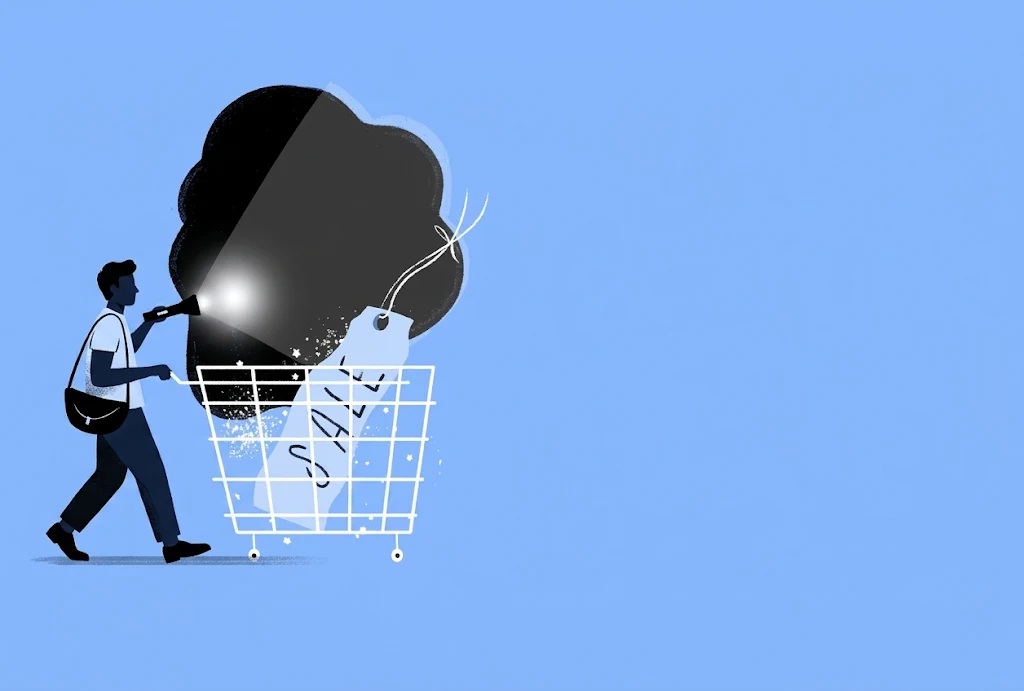
Needs, credit offers and the market’s symbolic power
We also asked whether businesses create needs during the sales rather than meet them. On this view, discounts mostly target items that buyers do not truly need. Avarzamani urges caution about dividing needs into “real” and “false.” From a sociological view, he says, needs and wants do not form in a vacuum. Instead, social, cultural and economic relations shape them, and that is where the market does its work.
Still, he sees the significance of Black Friday in Iran as going beyond need creation. He describes it as an “organization of social time” and a “temporal concentration of demand.” Beyond that, it is a process of “subject-making,” in which the market draws public attention through these dated occasions. It even has a plan for people who try to keep their distance.
If you have money problems, for example, credit firms offer to let you buy now and pay in installments. If you pay no attention, attractive ads and tempting offers come to you. And if you live far away, the logistics and transport network reaches you and makes it easy to browse and compare. In this way, he says, the market enters the realm of domination. It makes you, in one form or another, a subject of the process.
Avarzamani calls this “symbolic domination,” or the “symbolic power of the market.” Not everything the market does follows this logic, he stresses. However, many groups have been hit hard by the crisis in the economy, “and they are not few,” he said. When they come to see these standards as natural and self-evident, one can speak of symbolic violence, he said.
Pressure on stretched budgets
On one side, he says, many people face eroding purchasing power and incomes that lag behind living costs. On the other, a huge volume of advertising and sales calls makes the desire to consume feel possible for these groups. He describes this, too, as a form of the market’s symbolic domination.
He insists he is not blaming consumers. Clearly, platforms and the connected ecosystem around them hold far more power than consumers, especially atomized consumers, he says. Consumers also make decisions under inflation, limited incomes and pressure on living costs. Even so, their behavior helps reproduce these relations and the domination within them.
Laws are necessary but not enough
Egypt offers one comparison. Its Consumer Protection Agency has warned that fines for fake discounts can reach 2 million Egyptian pounds or twice the value of the product involved, whichever is greater. We asked Avarzamani what plays that role for Black Friday in Iran. He chose not to compare the two regulatory systems in detail. In his view, Iran also has good laws and rules in this area, though he said legal experts should judge that. The legal side is necessary, he said, “but not sufficient.”

The market logic at work is local and national, he says, and above all transnational. It has forces inside many business ecosystems and even within consumers themselves. As a result, rules alone cannot easily control it. Instead, he suggests more democratic civic groups and social bodies that come from the people themselves. Such groups could complement existing legal mechanisms and keep the process under continuous watch. They could also track and report on how transparent it is. An institution that spans so many levels, he says, calls for “a multi-layered social response,” not only a legal one.
Finally, we asked what a reader should ask before buying an item at 40% off with only until the end of the night to decide. Avarzamani answered for himself. Before such a purchase, he would ask whether he really needs the item and whether the choice is his own. Or, as he put it, “am I acting within a framework that another force, something like the market, has set for me?” That market, he said, wants to capture his attention. Then, through urgency and false emotions, it tries to define an opportunity for him.