

AI Agents Could Soon Join Teams at Iranian Tech Firms
Executives from Digikala, Divar and SnappPay describe AI at work across their platforms and plans for agents to join human teams.

Latest from Interview


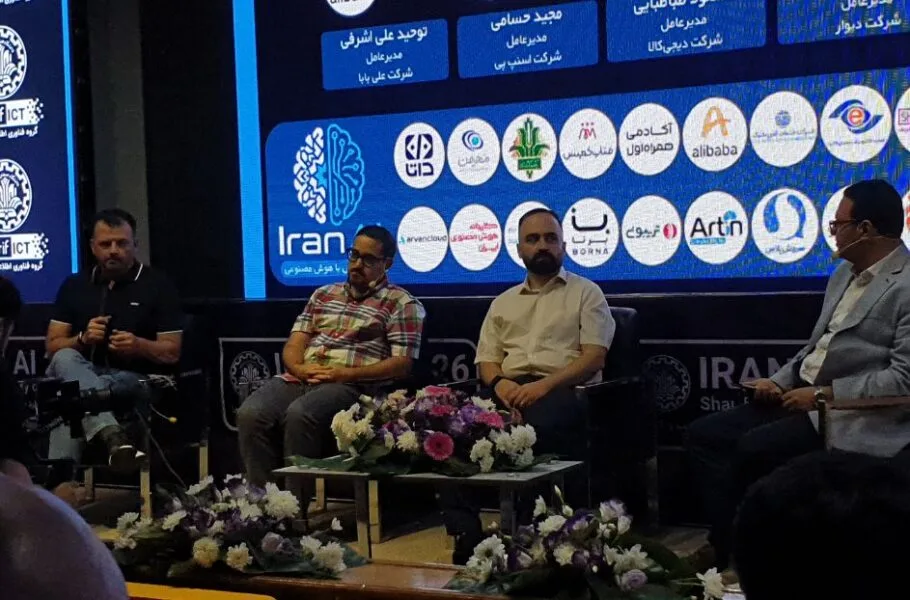
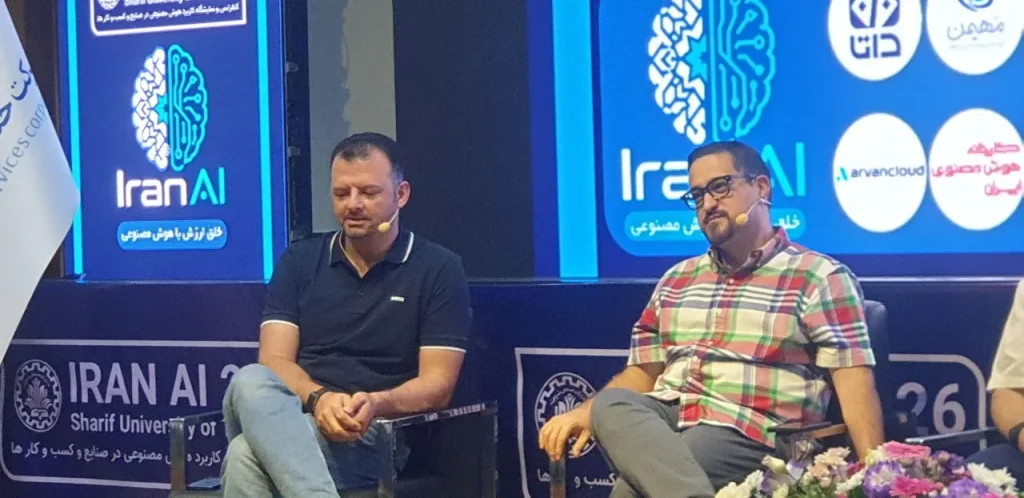
Executives at three major Iranian digital platforms expect AI agents to work alongside employees and, eventually, occupy defined places in their organizations. At the Iran AI 2026 conference on September 21, they described a management challenge that is becoming more immediate as their companies put AI to work in pricing, listing reviews, software development and customer service.
Masoud Tabatabaei, chief executive of the e-commerce marketplace Digikala, said the company is considering how to redesign its structure around human employees and AI agents. “Parts of the organizational chart will be filled by AI agents,” he said. The question, he added, is how to redesign the way people work with them.
Majid Hesami, chief executive of the buy now, pay later service SnappPay, said his company expects to have AI “coworkers” on its teams in the coming year. Managing those teams, he said, remains an open question. The discussion took place alongside Ashkan Armandeh, chief executive of the classifieds platform Divar, at a panel moderated by Alibaba chief executive Tohid Aliashrafi.
From plans to daily operations
The executives pointed to existing uses of AI as evidence of how much work is already changing. Tabatabaei said Digikala uses AI to summarize customer reviews, support purchasing decisions and assist its contact center. He said a pricing agent can scan a market covering hundreds of thousands of products in five minutes and update prices according to the company’s chosen rules.
Armandeh said AI now performs more than 96% of Divar’s listing review and approval process, with decisions made in under two minutes. During the Iranian year running from March 2023 to March 2024, he said, reviews took two to three hours. Divar also uses AI for search, matching listings and detecting suspected fraud, he said. The company is working on locally fine-tuned models and aims to offer users a more personalized experience in the coming year.
At SnappPay, about 40% of code is written with AI assistance and AI is used in 90% of software testing, Hesami said. He said the company wants to raise the share of AI-assisted code to 70% by the end of the year. An agent called Payar handles merchant registration and activation, while another, Paysheno, analyzes incoming calls and takes action based on their content, according to Hesami. SnappPay has also developed personalized text messages about debt repayment that it plans to roll out more widely.
The figures and performance gains were presented by the executives; no underlying methodology was supplied at the panel. Their examples nonetheless show why the question of supervising work shared by employees and AI agents is moving from a future scenario into company planning.