

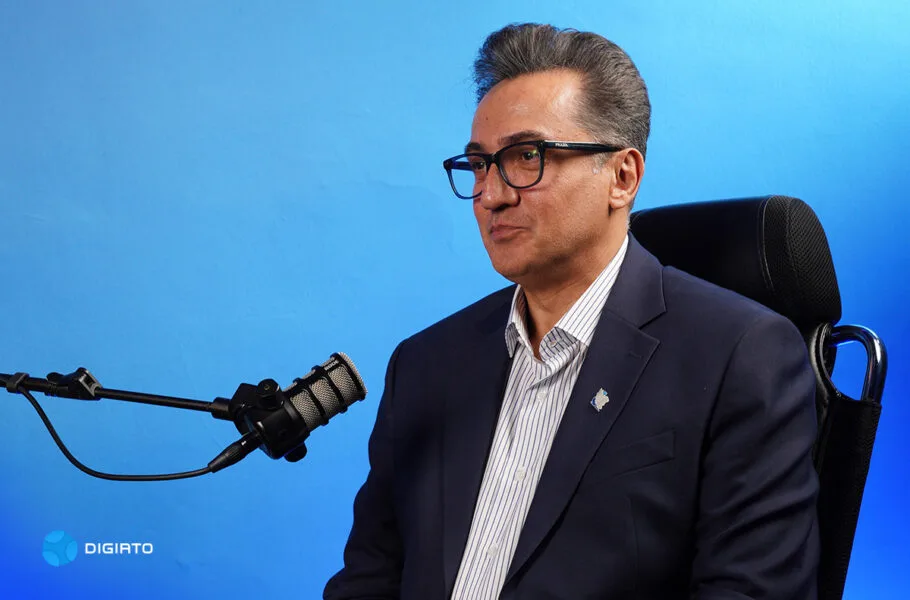
Tehran chamber official vows to challenge Iran’s AI licensing rules
Maziar Nourbakhsh says business groups will challenge Iran’s AI operator rules after GreenWeb received the first preliminary approval.

Latest from Interview


A Tehran Chamber of Commerce official said business groups would keep fighting Iran’s AI operator licensing rules after the telecom regulator granted its first preliminary approval to GreenWeb. Maziar Nourbakhsh, who chairs the chamber’s transformation, innovation and productivity commission, urged companies to hold off on applying.
Nourbakhsh told Digiato that the rules could restrict other businesses and give an advantage to quasi-state firms. The framework lets licensed operators sell cloud computing and storage, as well as platforms and software for building and running AI models. Communications Minister Sattar Hashemi has backed the rules as a way to expand the country’s AI infrastructure.
The minister’s case for the rules
GreenWeb’s approval gives it one year to prepare and meet the requirements for a five-year license. It needs the full license before it can serve new customers.
What GreenWeb’s approval allows
How business groups are challenging the rules
The national chamber, known as the Iran Chamber of Commerce, had already written to First Vice President Mohammad Reza Aref asking for implementation to stop. Nourbakhsh said officials at a chamber meeting, attended by telecom regulator chief Hamid Fattahi and government spokesperson Fatemeh Mohajerani, had promised to pause implementation and revise the rules. In October, Fattahi said changes or repeal were possible if the ministry and private-sector representatives agreed.
Nourbakhsh said the Tehran chamber sought feedback from trade groups and studied how other countries regulate AI. It submitted its findings to the Government–Private Sector Dialogue Council. At the council’s first technical meeting on the rules, Nourbakhsh said some invitees were absent and the chamber found that the government representatives who attended lacked sufficient familiarity with the issue.
He said business groups were also taking their objections to the Deregulation Board. In his view, the commission failed to follow the proper approval process, and the rules could conflict with the national AI development law, which calls for an independent AI organization under the president. Nourbakhsh said chambers of commerce, the computer industry’s trade body and other associations would pursue available legal avenues if the rules stayed in place. He said they had identified at least 10 major objections and argued that the challenges and the new law could render the license ineffective.
Fees and computing requirements
To qualify for a full license, applicants must document computing capacity of at least 200 petaflops at 16-bit floating-point precision or higher. They must pay a 50 billion toman license fee and provide a 100 billion toman bank guarantee at issuance. Those amounts were roughly $170,000 and $340,000 at the Nov. 28 open-market exchange rate.
License holders must also pay the government 3% of annual revenue. Starting in their second license year, they must add computing capacity each year equal to at least 50% of the previous year’s required capacity. Extra capacity installed ahead of schedule can count toward future requirements.
Critics say those terms could make it harder for startups and smaller technology firms to enter the market and could constrain businesses already offering AI services. Nourbakhsh said the rules offered no clear benefit to existing businesses. He also questioned the basis and size of the government’s revenue share. Other objections concern the regulator’s authority and whether it adequately consulted business groups.