
Azki enters Iran’s crowdfunding market, targets 5% share
Azki Crowd gains a license to fund Iranian businesses, targets a 5% market share in its first year and proposes secondary trading for investors.

Latest from Interview


Azki Crowd has received a license to raise money for Iranian businesses and aims to capture 5% of the country’s crowdfunding market in its first year.
The platform received its crowdfunding operator license from Iran Fara Bourse, a securities market operator, on Sept. 1, 2026. It is owned by Azki Sarmayeh, the Azki group’s financial services arm.
Manufacturing and service companies can use Azki Crowd to raise money from the public for specific projects.
The license adds business financing to the Azki group’s services, which include online gold and silver purchases, fixed-income and equity funds, insurance and loans.
Demand for working capital
Mohammadreza Khanaki, chairman of Azki Sarmayeh, said requests from established businesses seeking working capital prompted the move.
“In recent months, many well-known companies have approached us to secure working capital,” Khanaki said. “Medium-sized businesses’ access to bank funding has become more limited, and crowdfunding is one of the few transparent, supervised channels that fills this gap. We decided to build this infrastructure ourselves rather than act as an intermediary.”
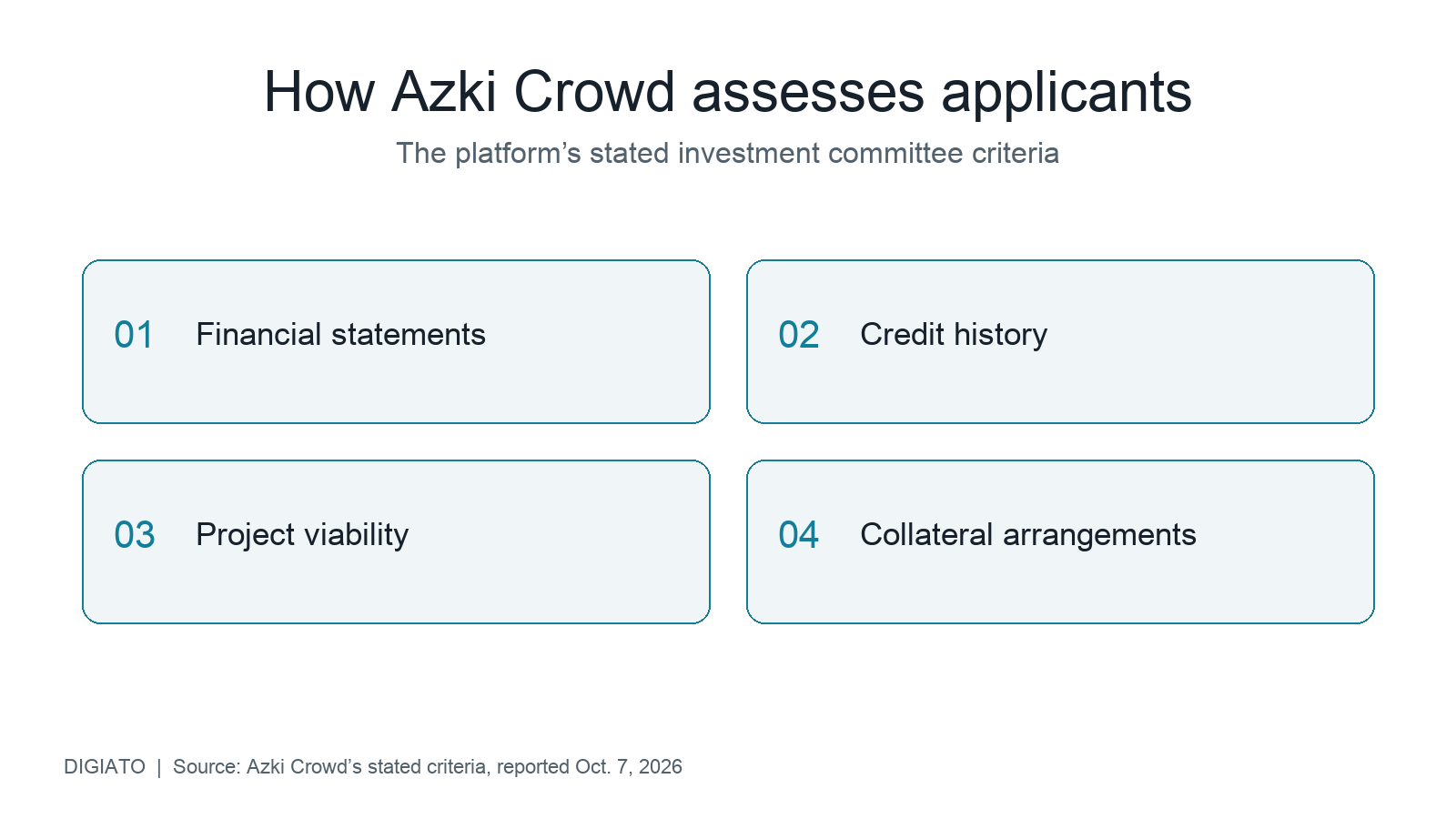
Azki Crowd says it will accept projects from established companies with a clear operating history. Its investment committee will use written criteria to review applicants’ financial statements, credit history, project viability and collateral arrangements.
Plans for a secondary market
Azki Sarmayeh also proposes a secondary market for crowdfunding certificates as part of its plans to develop tools for the crowdfunding market. This would let investors trade their certificates before a project’s term ends.
“The lack of liquidity is one of the serious obstacles to this market’s growth,” Khanaki said. “Investors currently have to wait until the end of a project’s term, and that keeps financing costs high for companies. If a secondary market takes shape, investor participation will broaden and financing rates for businesses will become more reasonable.”
Azki Sarmayeh says it plans to use its experience in capital markets and platform businesses to develop these tools over the long term.