
Next Shift Event Highlights AI Integration in Iranian Business Strategies
Iranian businesses explore AI integration at DigiNext event.

Latest from Interview


Participants at the DigiNext 'NextShift' event discussed the readiness of Iranian businesses to adapt to the wave of artificial intelligence.
AI's Transformative Impact on Work and Learning
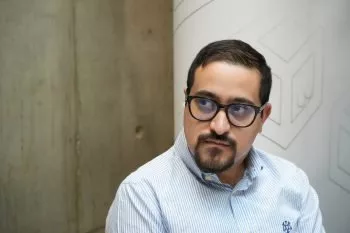
Keyvan Mohit-Maafi, CEO of DigiNext, spoke about the effects of artificial intelligence. He stated, "The wave of AI changes a series of things, including how people work and learn. Instead of following the usual learning process, people ask their questions to chatbots."
He continued, "The method of winning has also changed. Organizations cannot win solely by investing and employing elites. Google fell into this trap too. In 2016, everyone thought Google was the undisputed winner of AI. This fear of Google's definite victory led Elon Musk and Sam Altman to establish a non-profit company, shared among several players. This experience teaches us that if we neglect this wave, we will fall behind."
Tapsi's Strategy and the Role of Data
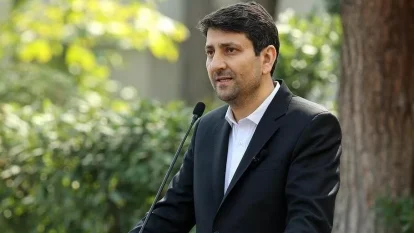
Hamidreza Soleimani, Vice President of Technology and Product at Tapsi, who has experience at companies like Spotify and Klarna, was another speaker at the event. Soleimani said, "AI is like a small cherry on the cake, but it has several hidden layers that receive less attention. This cherry is placed on the cake when we have more data and a suitable cloud infrastructure to store them. Just storing is not enough, we must be able to process them. This sweetness also needs a plate, which is human resources. When we put all these together, we reach AI, but merely talking about the top layer yields no results."
According to him, AI is not necessarily meant to lead to downsizing: "With AI, we can do repetitive tasks with common patterns faster. We need many data engineers, machine learning engineers, and so on. These are the same engineers present in the company who must learn more skills, not be laid off."
Soleimani also spoke about the establishment of Tapsi Cloud: "At Tapsi, we have a large volume of data that needs processing and storage. It's a tough job because we don't have many suitable companies in Iran for this work. That's why we have launched Tapsi Cloud."
DigiKala's AI Initiatives
In another part of the event, Kasra Fakhari, AI Manager of DigiKala, and Touhid Arastoo, Chief Shopping Officer of DigiKala, talked about the shopping assistant of DigiKala named DIA, which is set to become an intelligent shopping advisor.
Fakhari discussed the idea of starting the development of this assistant: "Instead of starting with a big product, we built an MLP and offered it to a limited number of users as an Instagram bot. We realized users want support from bots. That's why we unveiled a support chatbot too."
According to him, the development path of DIA continues, and in the future, it is set to provide a completely personalized shopping experience for users.
Tohid Arastoo also spoke about this shopping assistant: "At DigiKala, we strive to improve the shopping experience. To this end, we started collecting data several years ago. Our main goal was to use this data to create a better shopping experience. Often, our perspective is to launch a chatbot, but we wanted to attract more users while maintaining quality."
The Chief Shopping Officer of DigiKala continued: "With DIA, we create a new shopping experience so the user feels understood. Chatbots are not necessarily very fast. Optimizing this issue was a big challenge that we are improving. Like any software system, we have services that may go down for various reasons. We always strive to prevent this, but in DIA it is more important to us."
Business Leaders Discuss AI Adaptation
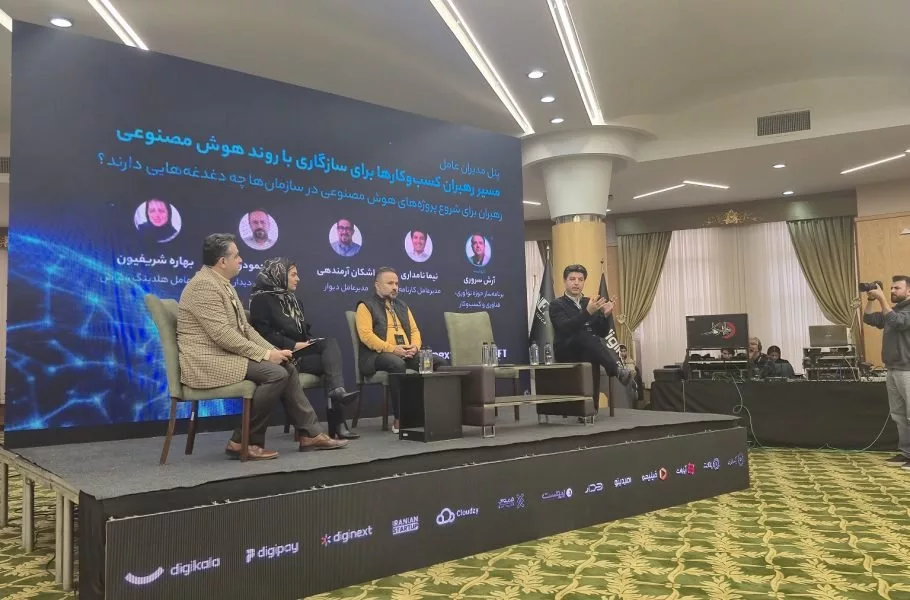
In the continuation of this event, a panel titled 'The Path of Business Leaders to Adapt to AI Trends' was held.
Bahareh Sharifioun, CEO of Sepas Holding, owner of brands like Bimeh.com and Safar.com, also spoke during this panel: "Without data, one cannot expect a miracle from AI. When there is no data, AI is not very useful to us. Our team has spent a lot to understand this issue and learn from wrong paths."
Sharifioun continued her remarks: "AI is a paradigm shift and not just a tool. Changing our mindset can make the applications of AI tools more efficient. Also, using AI may make employees aware of the risk of being eliminated, but this culture must be established that only those who cannot use AI are going to be eliminated."
Nima Namdari, CEO of Karanameh, spoke about the most important change that has occurred in this field: "Businesses have long used AI practically, but what has happened in the past two years due to generative AI is that it has turned from a B2B phenomenon to B2C. This has made investment in infrastructure development economical."
According to him, AI has not yet changed business models, but it has increased the confidence of businesses to achieve comprehensive AI.
Hamid Mahmoudzadeh, CEO of Didar CRM, also spoke in this panel: "Previously, in product development, we had a mobile-first approach, but now we have chosen AI-first. Since we have been using AI, the capacity of our development and product team has doubled."
The CEO of Didar also explained about the company's assistant, Aida: "Aida is set to replace employees whose work AI can do better. Aida works much better than a human, has no insurance, no taxes, has very low wages, and always works."