

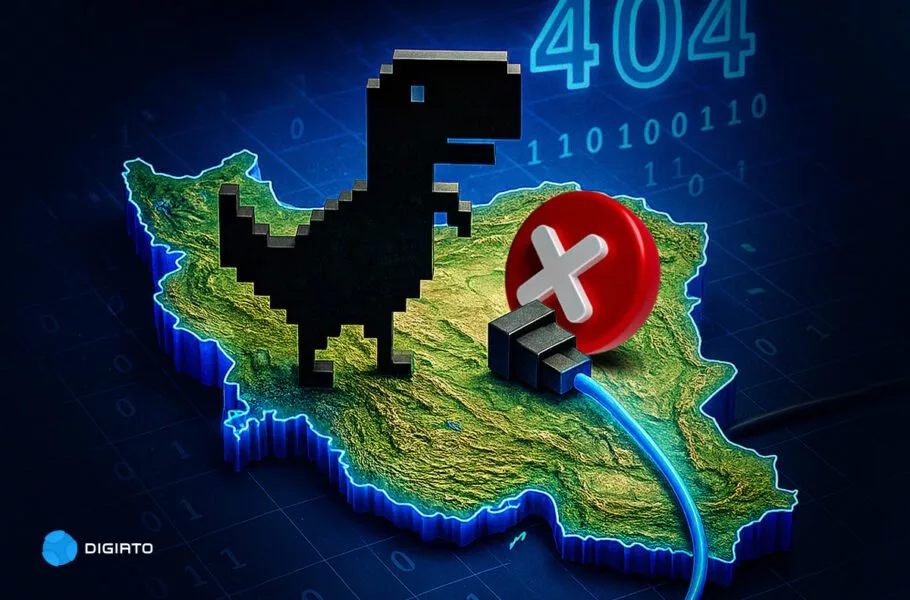
Iran’s Internet Went Dark on January 8 in One of the Largest Blackouts in Its History
On January 8, Iran experienced a near-total nationwide internet blackout that sharply reduced both domestic and international connectivity.

Latest from Interview


In early January 2026 Iran experienced a major disruption of its national telecommunications infrastructure when authorities imposed a near-total internet shutdown on January 8 as protests spread across the country. Independent monitoring groups and connectivity data show that domestic and international internet access dropped abruptly to near zero that day, resulting in one of the most extensive disruptions recorded in the country’s modern history.
According to internet observatories such as NetBlocks and Cloudflare Radar, connectivity across fixed and mobile networks plunged dramatically around 20:30 Iran Standard Time on Jan. 8, effectively isolating most of Iran’s 93 million residents from the global internet. Mobile data, broadband, SMS, and even many aspects of domestic communications were substantially restricted, with only limited, highly filtered services available.
Authorities have not published detailed technical diagnostics for the outage, but external analysts report that the shutdown was coordinated at the national level and affected critical network infrastructure. Traffic analyses show that IPv6 connections and other protocols vital for modern broadband were sharply curtailed, and there were widespread reports of telephone service disruption as well. Reports also indicate that some satellite-based services such as Starlink were targeted by jamming or interference, further compounding connectivity loss.
Iran’s ICT ministry later confirmed the shutdown was ordered by security authorities under the “prevailing circumstances”. In addition, government spokespeople referred to the blackout as a security measure.
Partial Restoration but Restricted Access
After several weeks of severely constrained connectivity, data and reporting indicate that some internet services began returning in late January, though access remains far below normal levels. Independent monitors and journalists reported intermittent availability of domestic websites and some foreign platforms, but widespread filtering and throttling persist.
At the same time, official statements from Iranian technology officials throughout January varied, with some asserting that normal internet traffic would soon resume while others noted ongoing restrictions on foreign online services. As of late January, international connectivity continued to be limited and unpredictable across much of the country.
Officials say they will decide on a full restoration once security conditions allow. A senior MP was quoted saying top security bodies aim to lift the blackout “in the coming days” and return service “as soon as security conditions are appropriate”.
Broader Impact
The prolonged outage has had measurable economic consequences in Iran. Estimates from industry sources suggest that the shutdown inflicted significant direct economic losses, disrupting e-commerce, financial transactions, digital services, and daily business operations.
Technical monitoring groups have described the blackout as among the longest nationwide shutdowns Iran has imposed, rivaling or exceeding previous shutdowns in 2019 and 2025 in both scale and duration. The result has been a highly constrained information environment within the country and limited visibility outwards on events there.
Current Situation
As of early February 2026, Iran’s internet is partially restored in certain regions, but connectivity to the global internet remains restricted and uneven. Observers characterize the situation as a controlled partial restoration rather than a full return to ordinary service levels.