


An Overnight Shutdown and No Clear Authority: Payment Gateways Suspended for Health Platforms
Conflicting statements from Iran’s e-commerce and health regulators raise questions over governance, legality, and digital health access.

Latest from Interview


The night of December 21 was an unsettling one for several Iranian digital health platforms. While the date coincided with Yalda Night, a traditional Iranian celebration, the concern for these companies had little to do with festivities. Instead, they faced the sudden suspension of their eNAMAD certificates, followed by the immediate shutdown of their online payment gateways.
Platforms including Doctor Doctor, Axon, and Pezeshk Book received notices on December 21 informing them that their eNAMAD certificates had been suspended, without prior warning or a grace period.
In Iran, eNAMAD is a mandatory government-issued trust seal required for online businesses to operate legally and access payment services. Without it, platforms are effectively unable to process payments.
To better understand how the decision was made, Digiato spoke with two industry representatives. Their accounts reveal conflicting explanations from regulatory bodies.
FDA Granted Authority to Suspend eNAMAD
According to Nima Qazi, president of the Tehran E-Commerce Association, Iran’s Electronic Commerce Development Center, commonly known as TETA, had granted Iran’s Food and Drug Administration (FDA) the authority to suspend eNAMAD certificates for businesses operating in the digital health sector.
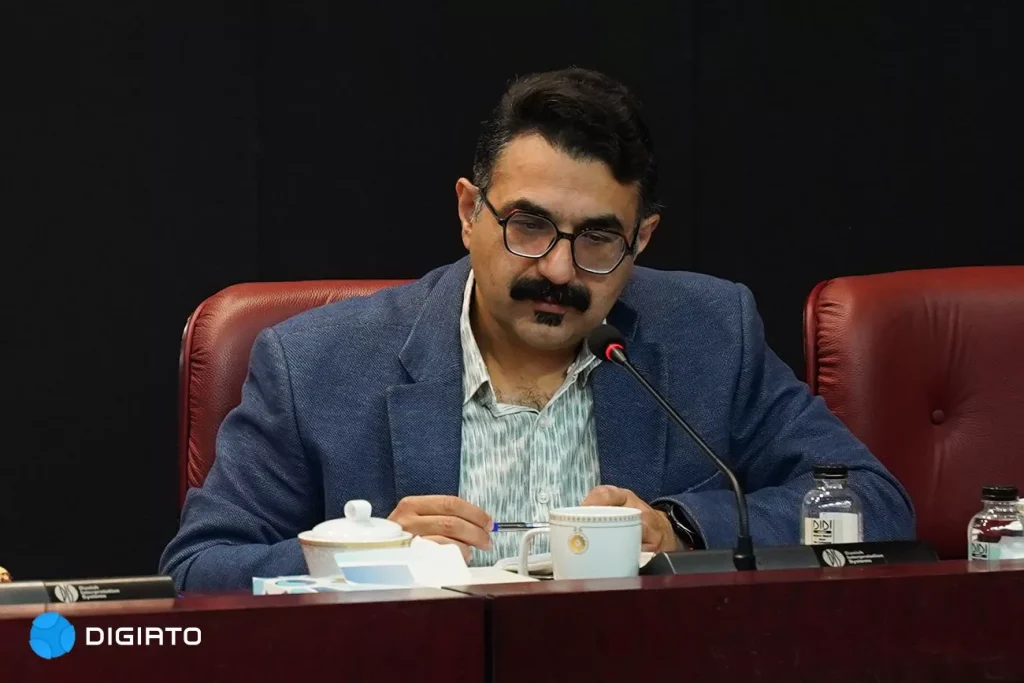
Qazi told Digiato that when the association contacted TETA for clarification, officials stated the matter was outside their control. According to TETA, the Ministry of Health, through the FDA, had been given direct access to issue suspension warnings.
Qazi said this authority was granted following a meeting at Iran’s Anti-Smuggling Headquarters, where the FDA criticized TETA for failing to suspend digital health platforms. As a result, the FDA was given the technical ability to trigger suspensions when it deemed necessary.
However, this account contradicts statements from the FDA.
Anahita Amereh, vice president of Iran’s Digital Health Association, said that when she followed up with the FDA, officials denied having such authority. According to Amereh, the FDA claimed it does not have access to suspend eNAMAD certificates and accused TETA of procedural misconduct.

Amereh told Digiato that the warning and the suspension were issued on the same day, December 21, leaving no opportunity for corrective action. FDA officials reportedly stated that TETA should not have issued both the warning and the suspension simultaneously.
Regulatory Vacuum Around Online Drug Sales
The dispute unfolds amid ongoing uncertainty over regulations governing online drug distribution in Iran.
In October, Iranian authorities announced that new regulations for online pharmaceutical sales had been finalized. These rules were expected to bring clarity to a long-disputed area of digital health. However, according to industry representatives, the regulations were never formally issued or published.
Qazi said the regulations do not appear in Iran’s national licensing system and have never been officially communicated to businesses.
He stated that multiple letters were sent to regulators asking why the regulations had not been published if they indeed existed. According to Qazi, no formal discussions were held, and instead of addressing the regulatory gap, authorities moved directly toward enforcement.
Qazi added that the FDA claims platforms are operating without a required license, yet no such license has been defined or made available through official channels.
He also said the FDA has conditioned the restoration of eNAMAD certificates on platforms halting online drug sales entirely. According to Qazi, this demand lacks legal basis, as platforms previously obtained approval from Iran’s Deregulation Board to continue online drug distribution under union-issued licenses.
Platform Operations Brought to a Halt
Amereh emphasized that the suspension of eNAMAD certificates affects all aspects of a platform’s operations, not just pharmaceutical services.
She explained that shortly after midnight on Sunday, multiple companies saw their eNAMAD certificates suspended and their payment gateways shut down without advance notice. These companies operate in a range of digital health services beyond medication delivery, meaning the decision effectively froze their entire business activity.
Amereh also criticized the lack of dialogue with regulators. She said the Digital Health Association formally requested in-person meetings to discuss the new directives and attempted to accelerate the process through direct visits. As of now, no such meeting has taken place.
She described the regulations announced in October as vague and difficult to interpret, noting that authorities appeared to suggest operational frameworks would be defined later. According to Amereh, regulators expect platforms to cease operations until those frameworks are finalized, despite offering no timeline or clarity.
Amereh further questioned the selective nature of the enforcement, asking why only certain platforms had their payment gateways shut down.
“If this action is justified,” she said, “then it should apply to everyone equally.”