
“The Plan Was Ready, Cooperation Was Not,” Former Cyber Secretary on Iran’s Tiered Internet Scheme
Former official reveals Iran's failed 'white SIM card' plan for 7 million.

Latest from Interview


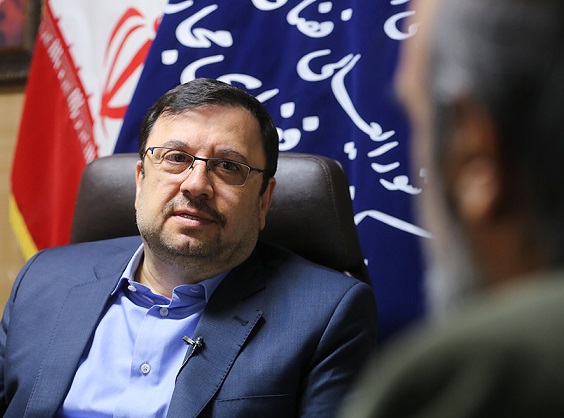
The former Secretary of the Supreme Council of Cyberspace, Abolhassan Firouzabadi, revealed that five years ago, a plan existed to distribute 'white SIM cards' to about 7 million people. This group included university students, journalists, tourists, and merchants. However, the plan was not executed due to a lack of cooperation from relevant agencies.
According to Digiato, Firouzabadi, who served as Secretary from 2015 to 2022, shared this information in an interview with Khabar Online. He explained, "In our resolution, all groups needing access to 'white internet' were considered, including tourists. The plan was for several million people to use white SIM cards, but it was not executed."
He detailed the intended groups: "University students were to have full access to YouTube on campus and via personal SIM cards. Social media platforms were planned to be fully accessible for journalists, estimated at 18,000 to 25,000 individuals. Business card holders, due to economic needs, and tourists upon entering the country, were also included. The total would have been around 7 million. This was to counter the claim that the entire nation cannot access the full internet."
However, the plan failed to materialize. Firouzabadi cited a lack of necessary cooperation from agencies as the main reason.
Presidential Authority on Internet Restrictions
In another interview segment, Firouzabadi discussed the president's authority to lift internet restrictions. He believes the president has the needed authority but seeks consensus. "The president is head of both the Supreme National Security Council and the Supreme Council of Cyberspace. He can influence 'SHAK,' a National Security Council subsidiary, through the Minister of Interior. These councils' resolutions are enforceable. He has not claimed to lack authority. He seeks consensus," Firouzabadi stated.
He mentioned that the three government branches' heads support lifting restrictions: "There are interpretations that they support lifting restrictions. The council of the three heads, if willing, can implement this. Initially formed for economic matters, opening platforms could fit this framework."
Telegram's Unmet Conditions in Iran
Firouzabadi also addressed Telegram's status in Iran during Hassan Rouhani's presidency. He stated the platform did not accept conditions for operating in Iran: "During my tenure, negotiations with Telegram were held, but they did not accept conditions set by the Islamic Republic. These included compliance with laws, establishing a Tehran office, accountability, and storing data domestically. Telegram rejected these. They sent hardware for service improvement but did not fulfill the main requirement of domestic data storage. Thus, that project was unrealized."
Telegram's presence in Iran during Rouhani's presidency has been discussed, particularly by former Minister of ICT, Mohammad Javad Azari Jahromi. Recently, he stated in an interview: "In 2015 or 2016, Pavel Durov came to Iran and met with us. He agreed to adhere to principles Telegram follows. We found 99% of our 67 cases aligned with five principles he accepted."
Azari Jahromi added, "Telegram did not bring databases to Iran but set up a 'CDN' and servers, as done in other countries. After restrictions, everything was removed."